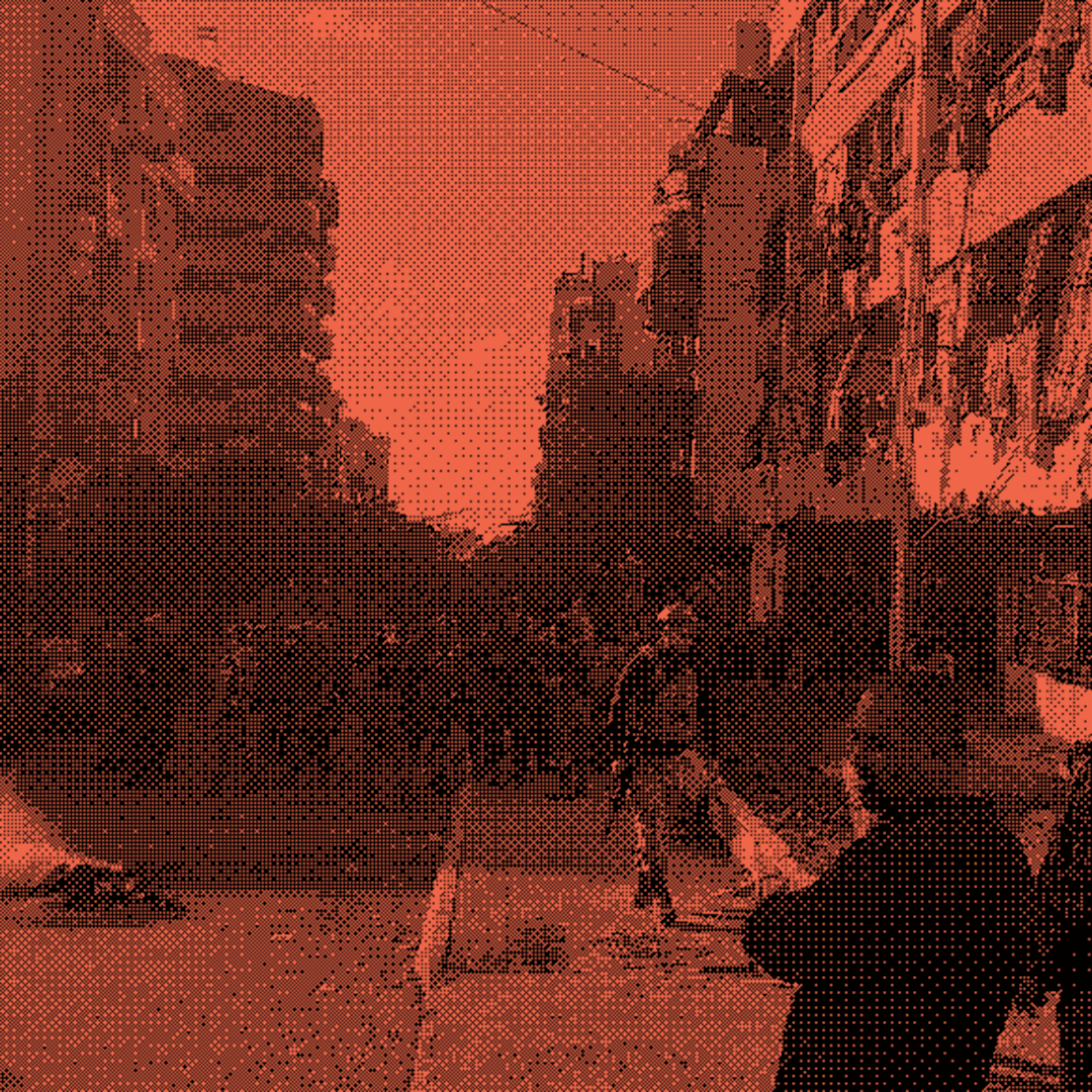
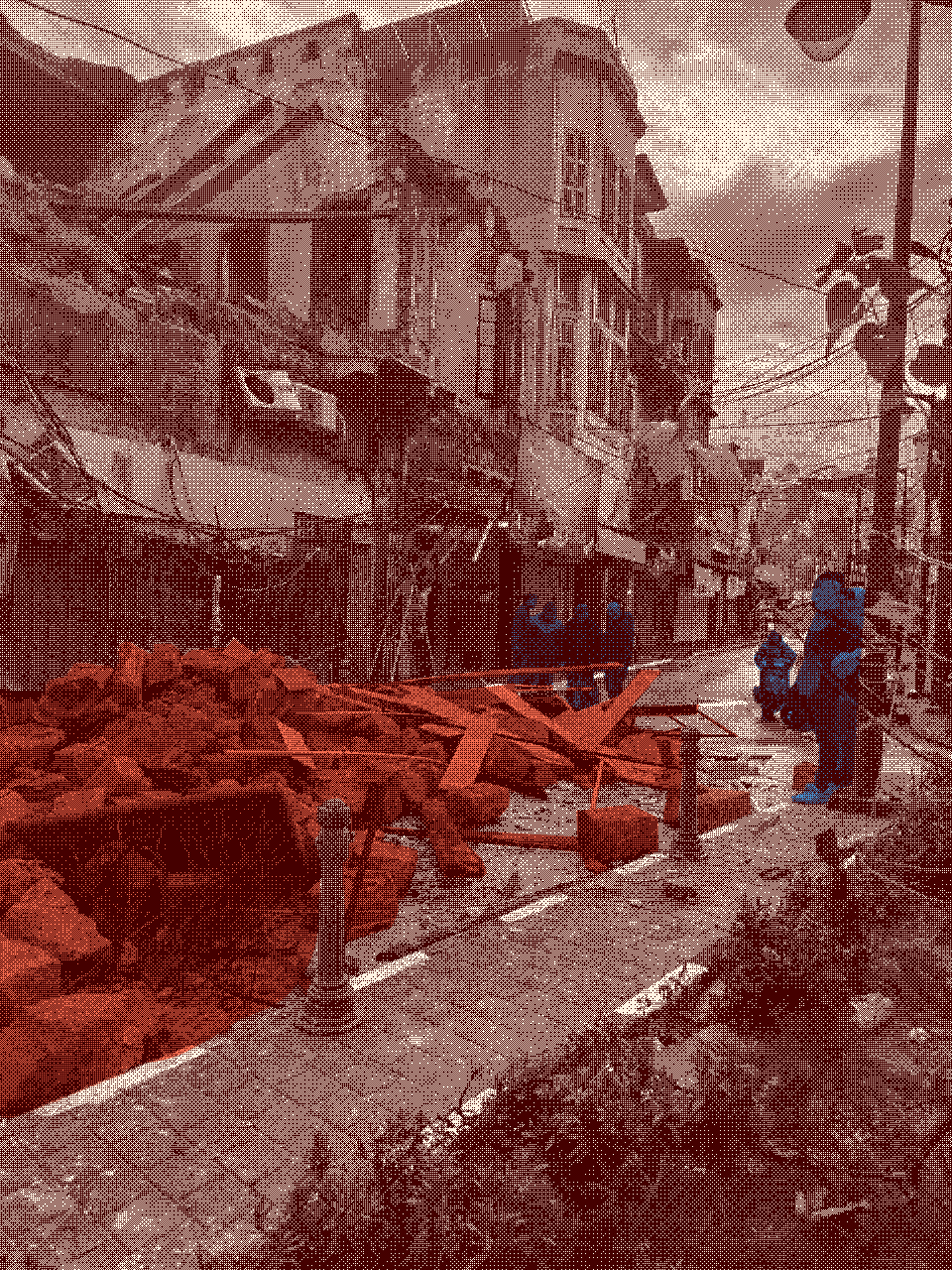
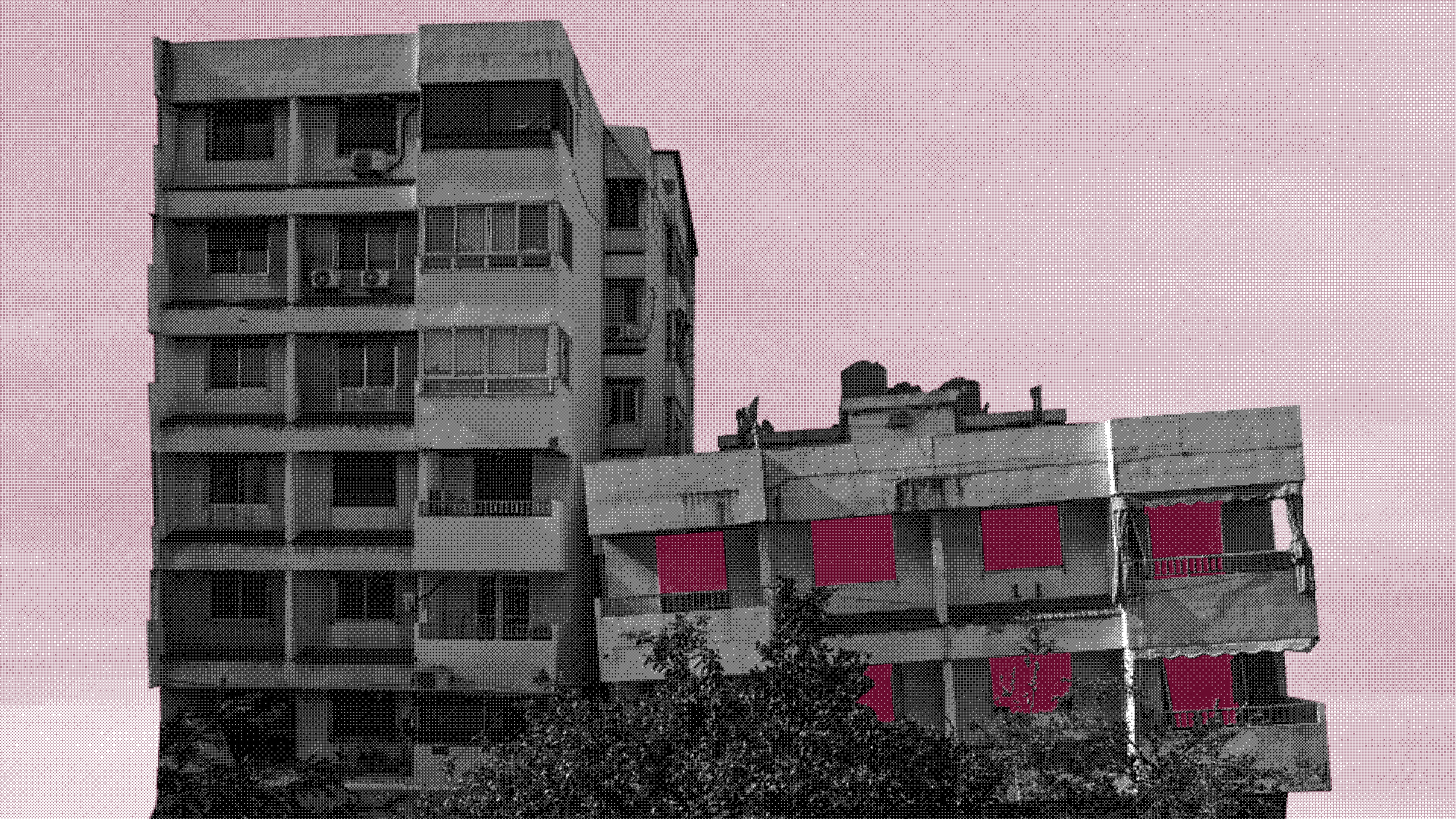
Over the past five years, devastating building collapses have shaken various Lebanese cities. These tragic and recurring incidents have resulted in significant human casualties and extensive material losses. However, they are not isolated events but rather a warning signal of the absence of housing justice and the state’s failure to protect its residents’ basic rights.

At Public Works Studio, we continue to investigate the issue of collapsed buildings, aiming to uncover the facts and open a discussion about the deteriorating built environment, the causes of these collapses, and the responsibilities of various entities, from official authorities to negligent parties. This report is a key component of this effort, providing detailed case studies of five buildings that have collapsed recently: the Musallami Building in the Arsal neighbourhood, Sabra; the Amhaz Building in Sahra Choueifat; the Yazbek Complex in Mansourieh; the Nashar Building in Daher El Mugher, Tripoli; and the Rishani Building in Choueifat, which resulted in 13 fatalities and left about 70 families homeless. The report sheds light on the fate of the residents after the collapse.

Additionally, the report highlights the rates of unsafe housing in Lebanon, based on data from the Housing Monitor. It also discusses the responsibilities for providing alternative housing for those displaced by building collapses. The absence of alternative housing options after such collapses is a clear violation of the right to adequate housing and contravenes international treaties and agreements.

Housing security, especially for the impoverished or those who survived the collapse of their homes and its psychological and physical consequences, cannot be considered an individual responsibility. The ability of society’s most vulnerable to recover after disasters is entirely dependent on the state’s provision of support networks and tools to secure basic rights. Otherwise, as we see today, we head towards producing a society that weakens individuals and communities, placing an undue burden on them and perpetuating the absence of social justice.

Read the Full Study in Arabic.
 

Nadine Bekdache

Co-director and Head of Communication and Design Unit

Nadine is a practicing designer and urbanist, and co-founder of Public Works Studio. She researches socio-spatial phenomena through multidisciplinary methods; including mapping, imagery and film as both processes of investigation and representation. As part of her research on urban displacement, she authored “Evicting Sovereignty: Lebanon’s Housing Tenants from Citizens to Obstacles”, and co-directed “Beyhum Street: Mapping Place Narratives”. Nadine is also a graphic design instructor at the Lebanese University.


Riad Ismail El Ayyoubi

Caseworker (Consultant)

Riad works as a caseworker based in Tripoli. His research interests include studying the social and political history of cities in the eastern Arab world, as well as the trilateral relationship connecting the built environment, people, and language(s), all in order to push for the reclamation of (historical) tools in populating the earth, and tools to dismantle the oppressive modes of (private) property, and the divisive binary of individual and communal interests, such as land revival and innovative imaginaries. He is also a member of Kohl’s translation team and has translated a number of articles on subjects including Feminism, anti-colonialism, and biopolitics.


Abir Saksouk

Co-Director and Head of Research Department

Abir graduated as an architect in 2005, and later did her masters in Urban Development Planning. She is the co-founder of Public Works Studio. Her primary focus includes urbanism and law, property and shared space, and the right to the city of marginalized communities. She is active in exploring how local organizing could be employed in actively shaping the future of cities. Abir is also a member of the Legal Agenda and a co-founder of Dictaphone Group. 


Rayan Alaeddine

Researcher

Rayan is a civil engineer holding a Master’s degree in public works and road planning from the Lebanese University (2019), and a dual Master’s degree in geotechnical engineering from the University of Lille-France and the Lebanese University (2021). Using a variety of research and fieldwork tools, she is interested in discovering the dynamics of the urban environment, while adapting it to the fair and just use of people and all living creatures. Her work also includes monitoring and observing the changes of various urban elements and factors.

ConstructionHousingAley DistrictBaabda DistrictChoueifatDahr Al-MaghrGhobeiryLebanonMetn DidtrictMount Lebanon GovernorateNorth Lebanon GovernorateSabraTripoli


Buildings Collapse in Lebanon

It is difficult to be surprised today by the collapse of buildings around the Lebanese territory, being aware of the amount of legal and material factors that have weakened and destabilized their structure, …

Five Factors that Contributed to the Deterioration of the Urban Environment in Lebanon

This text highlights Lebanon’s urgent issue of severe physical degradation in its urban environment, with over 18,000 buildings at risk of collapse, particularly in Beirut and Tripoli. It attributes urban decay to a …

The Primary Causes Behind the Increasing number of Collapsed Buildings in Lebanon

In 2023, seismic activity raised concerns about building collapses in Lebanon, initially overlooked until a series of incidents occurred across different regions. These events are part of a broader context where Lebanon faces …

 In Bir Hassan, Eviction After Displacement, Under the Pressure of Real Estate Development, and the Pretext of Protecting the Safety of Residents

After a long history of threatening families displaced by the Lebanese Civil War with eviction from a residential building in Bir Hassan under the pretext of being “illegal occupants,” and following failed negotiations, …

Tripoli or the city that falls apart piece by piece

Buildings are falling apart in Tripoli, not haphazardly, but as a logical result to the city’s policies vis-a-vis old buildings. This article presents PW’s analysis of the underlying reasons, and proposes steps for ...