Mount Lebanon Governorate

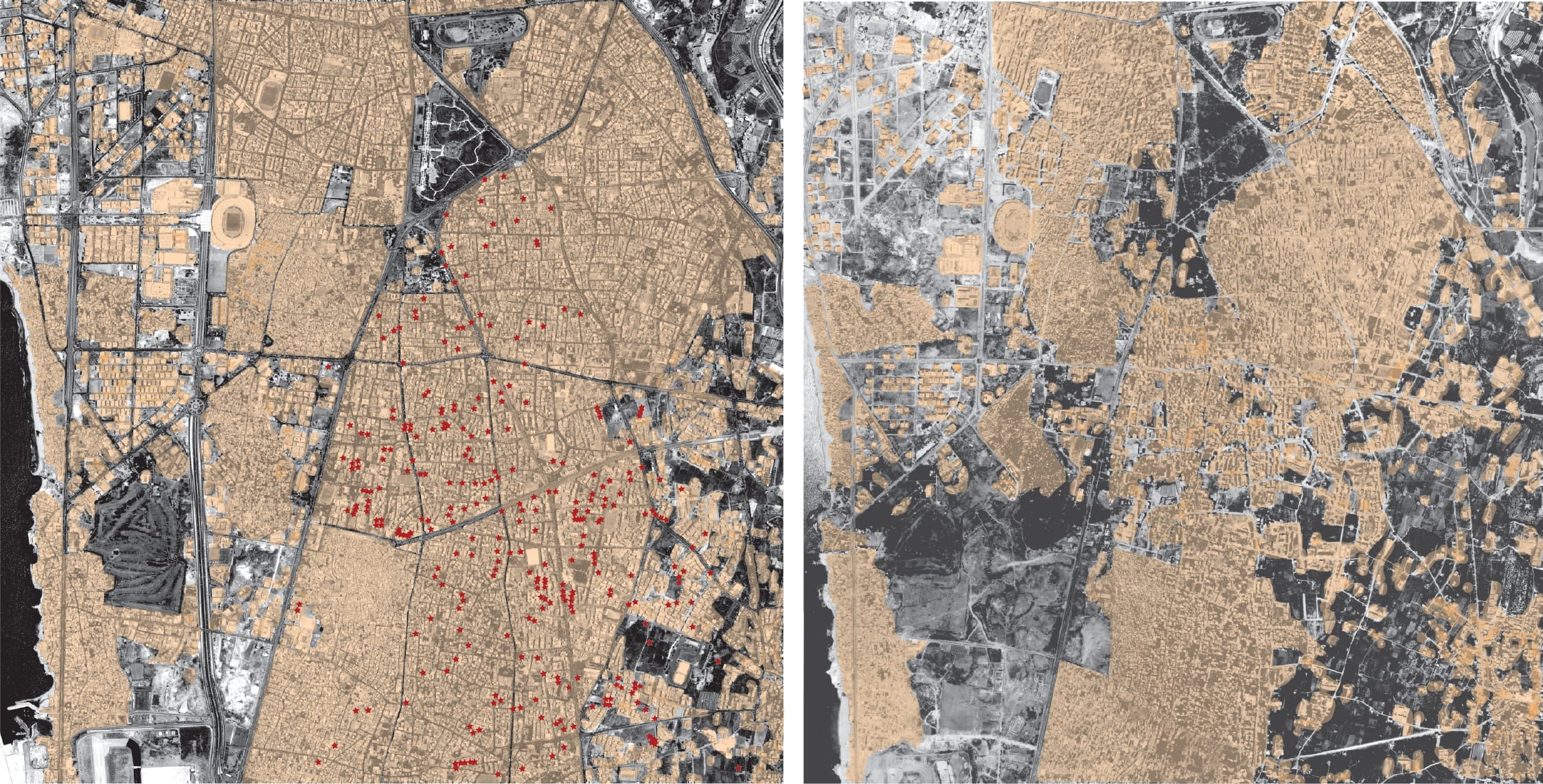
Urbicide as a strategy: The southern suburbs of Beirut between the attacks and the urban fragmentation

Amid rubble and a fractured social fabric, Beirut’s southern suburbs bear the scars of the Israeli war, which struck homes, markets, schools, and hospitals. Drawing on data, maps, and local testimonies, the article documents the scale of destruction and raises urgent questions about urban justice and the future of the city’s reconstruction.
A law proposal to establish a separate cadastral zone for the municipality of Saadiyat, submitted by MP Bilal Abdullah, represents a pivotal point for a deeper discussion around the history of these areas and their evolving social boundaries. In the case of Damour and Saadiyat, the area became a symbol of the profound political crisis brought about by demographic changes in the Chouf coastal region, resulting from transformations and repeated waves of displacement to and from it.

Lessons from the “Waad” Reconstruction Project

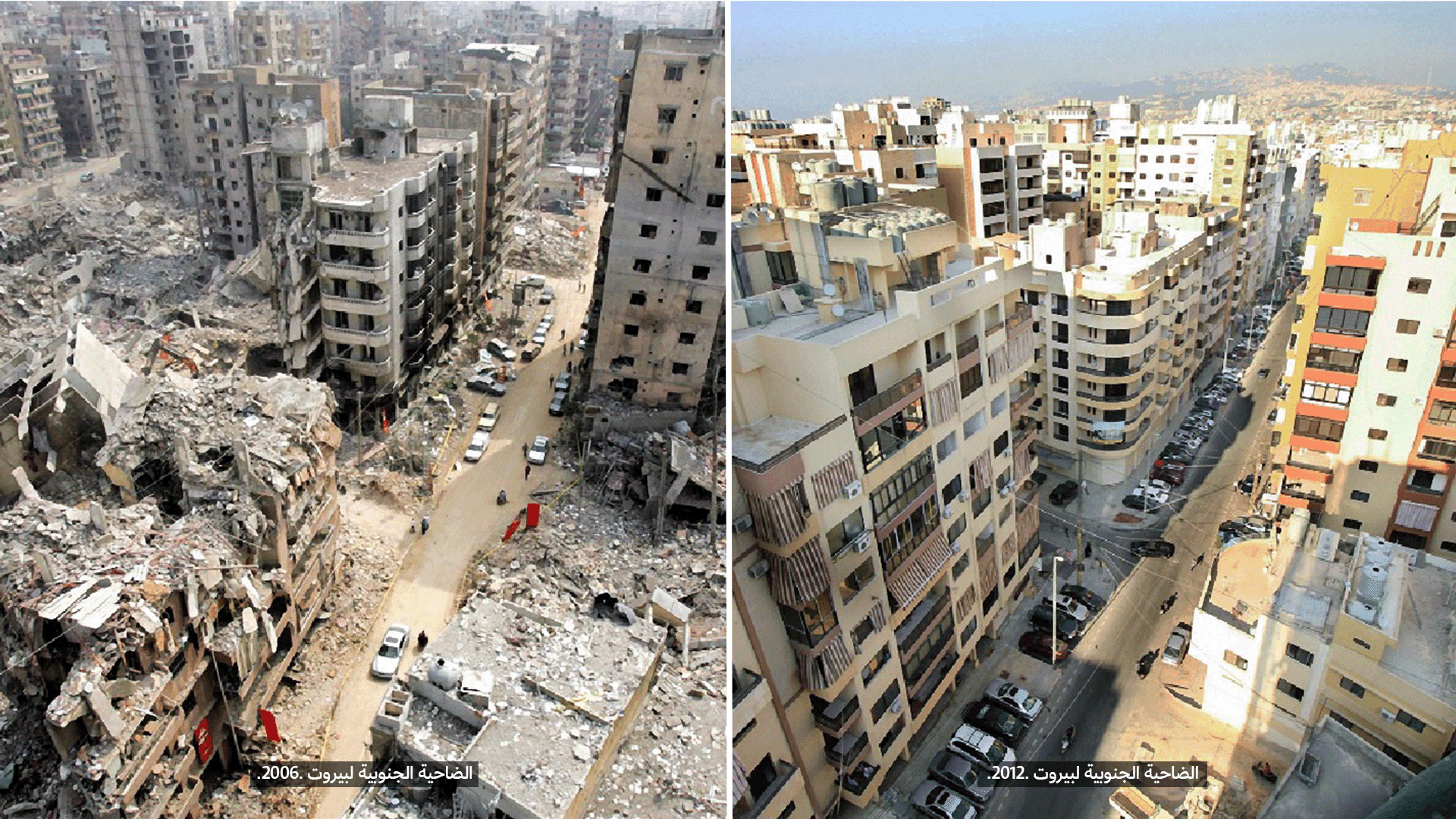
After thirty-three days of continuous bombardment that killed more than 1,000 people, the 2006 war affected a total of 1,232 buildings, mostly residential.
On November 14, 2006, a meeting was held with residents, where they expressed one primary concern: returning to their homes as soon as possible. Accordingly, the local political party promised to rebuild Beirut’s southern suburbs, making them “more beautiful than before,” as the slogan of the project became.
In this text, we present the project and its challenges, especially at the urban level.

 The New Rent Law Threatens to Dissolve a Neighborhood: The Eviction of a Building in Burj Hammoud

In Burj Hammoud, old tenants face eviction from their decade-long homes as Lebanon’s old rent law nears its end. Their story reveals the legal gaps in law 2/2017 and how unaffordable rents threaten entire communities.

Investigating the Religious Land Endowments in Lebanon

Part 2 | The Lost Social Value of the Properties of Three Sects in Greater Beirut

Amid Lebanon’s economic crisis, religious authorities have been excluded from the discussion on sharing the losses, despite being among the largest landowners and benefiting from tax breaks. In this context, it was necessary to conduct an in-depth study of religious endowment lands (waqf), highlighting their social value, placing them at the center of the wider conversation on the economic collapse, as well as shedding light on the needed regulation and taxation, and making the related data accessible as a basis for any future advocacy.

Investigating Religious Land Endowments in Lebanon

Amid Lebanon’s economic crisis, religious authorities have been excluded from the discussion on sharing the losses, despite being among the largest landowners and benefiting from tax breaks. In this context, it was necessary to conduct an in-depth study of religious endowment lands (waqf), highlighting their social value, placing them at the center of the wider conversation on the economic collapse, as well as shedding light on the needed regulation and taxation, and making the related data accessible as a basis for any future advocacy.

Who’s Beirut?

On the Necessity of a Unified Conception of the City that Goes Beyond its Municipal Borders

Over the course of more than a century, Beirut has witnessed a radical transformation and tremendous urban and population growth intertwined with major historical events. Aerial maps show this expansion, but also they raise a basic question: Who is Beirut today, with its urban complexities and interactions?

Displaced Persons and Returnees: Between Rising Rents and the Israeli Targeting of Prefabricated Homes

In the aftermath of the ceasefire, both the displaced and returnees are struggling to access affordable, suitable, and safe housing. Over 90,000 individuals remain displaced, with most relying on rental housing, where landlords have significantly inflated prices. Meanwhile, returnees continue to endure Israeli violations, with repeated attacks on prefabricated homes, further undermining return efforts. This crisis underscores the urgent need for state intervention to guarantee the right to adequate, affordable, and safe housing.

Evacuation and demolition of shops in Burj al-Barajneh: a struggle between Planning and Social Marginalization

In January 2025, the Burj al-Barajneh municipality, backed by the Lebanese army and security forces, evicted and demolished informal shops, sparking resident protests. While the municipality claimed it was reclaiming public land, its move suggests an attempt to control the area’s informal economy.

Investigating the Religious Land Endowments in Lebanon

Amid Lebanon’s economic collapse, along with other successive crises, “ownership” is raised as a fundamental issue in shaping the system of social and economic relations, framed by the state through laws, making it …

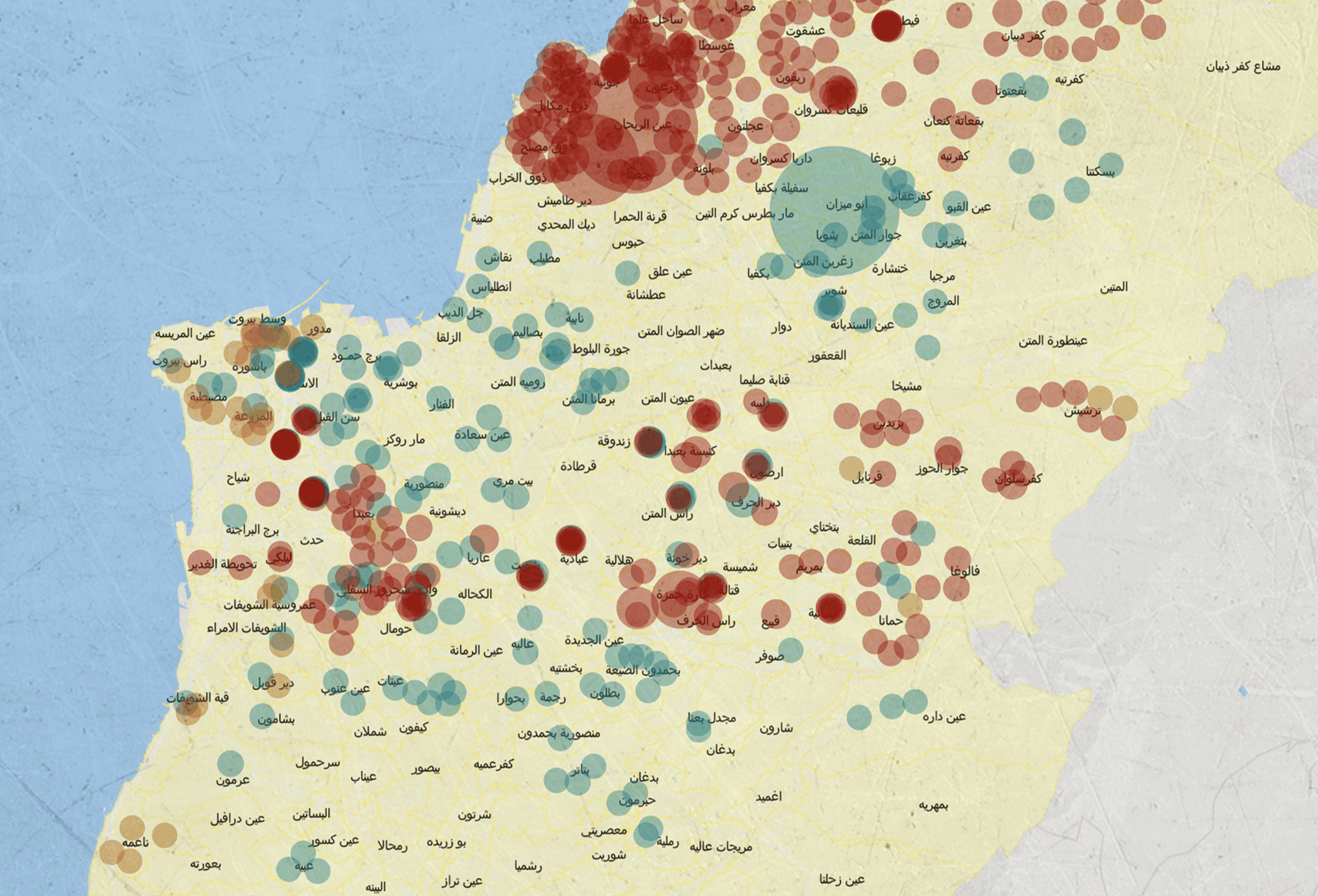
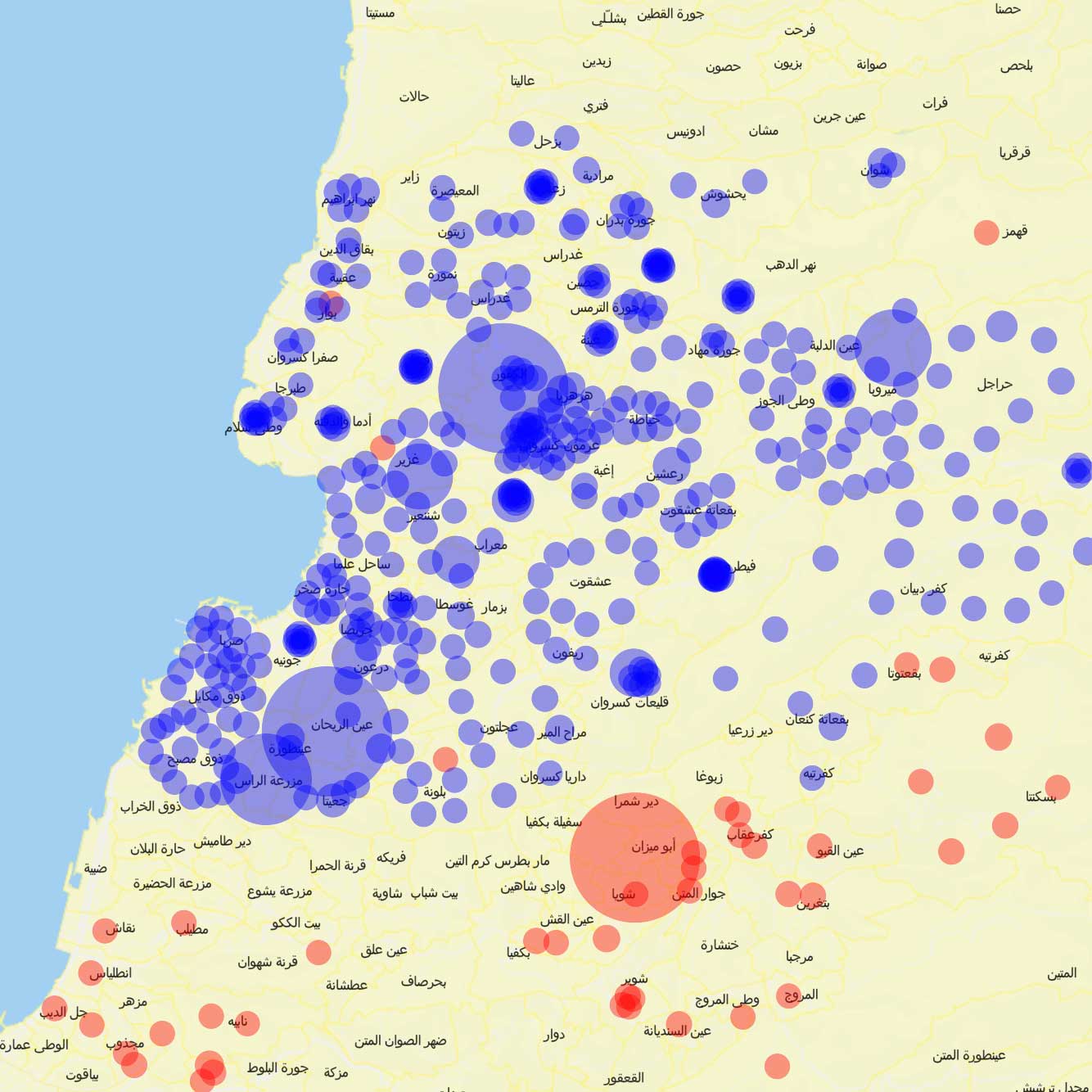
Distribution of Sunni, Orthodox, and Maronite Endowment Lands (Waqf) in Mount Lebanon and Beirut

The map and article is not yet translated, refer to the Arabic version here.

 In Bir Hassan, Eviction After Displacement, Under the Pressure of Real Estate Development, and the Pretext of Protecting the Safety of Residents

After a long history of threatening families displaced by the Lebanese Civil War with eviction from a residential building in Bir Hassan under the pretext of being “illegal occupants,” and following failed negotiations, …