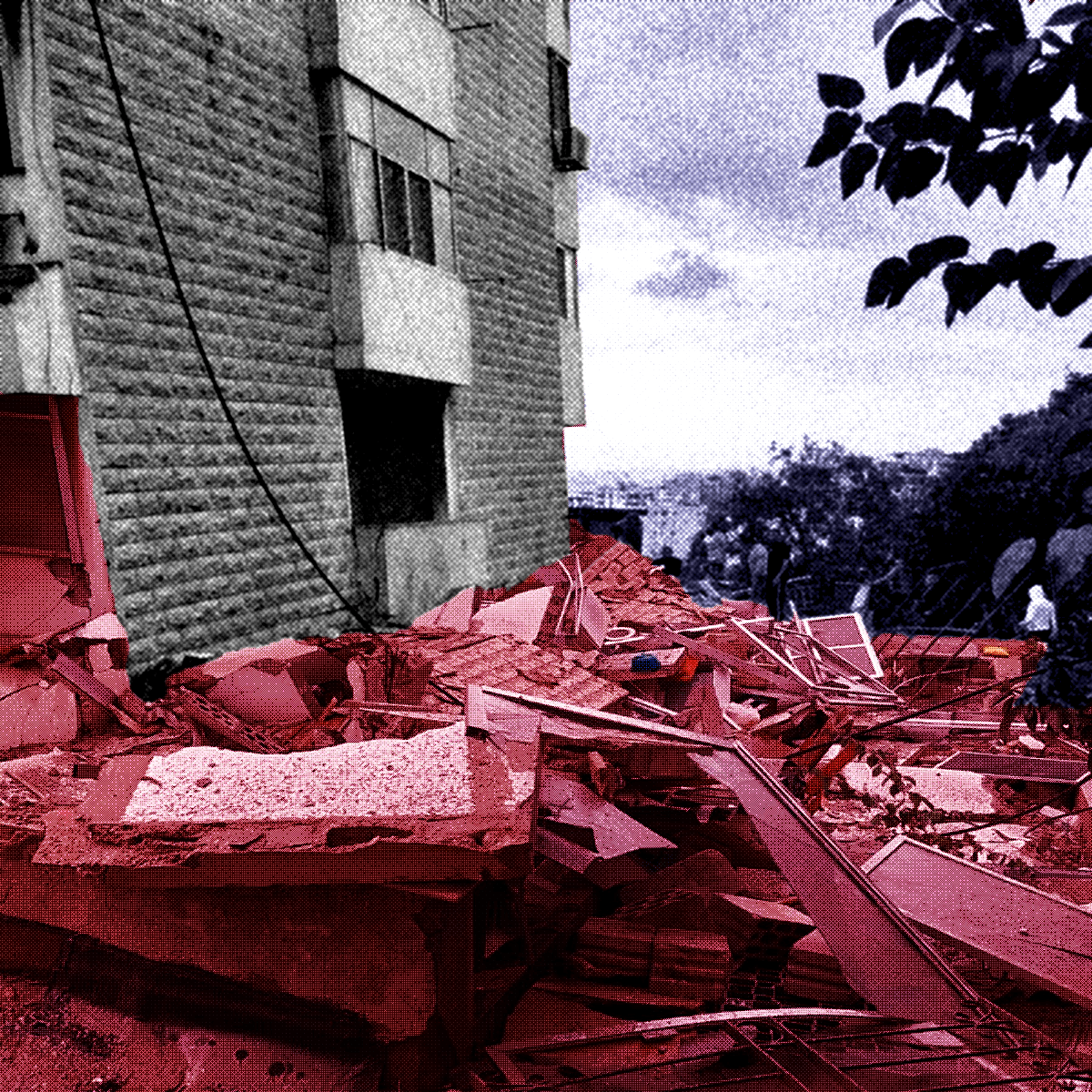
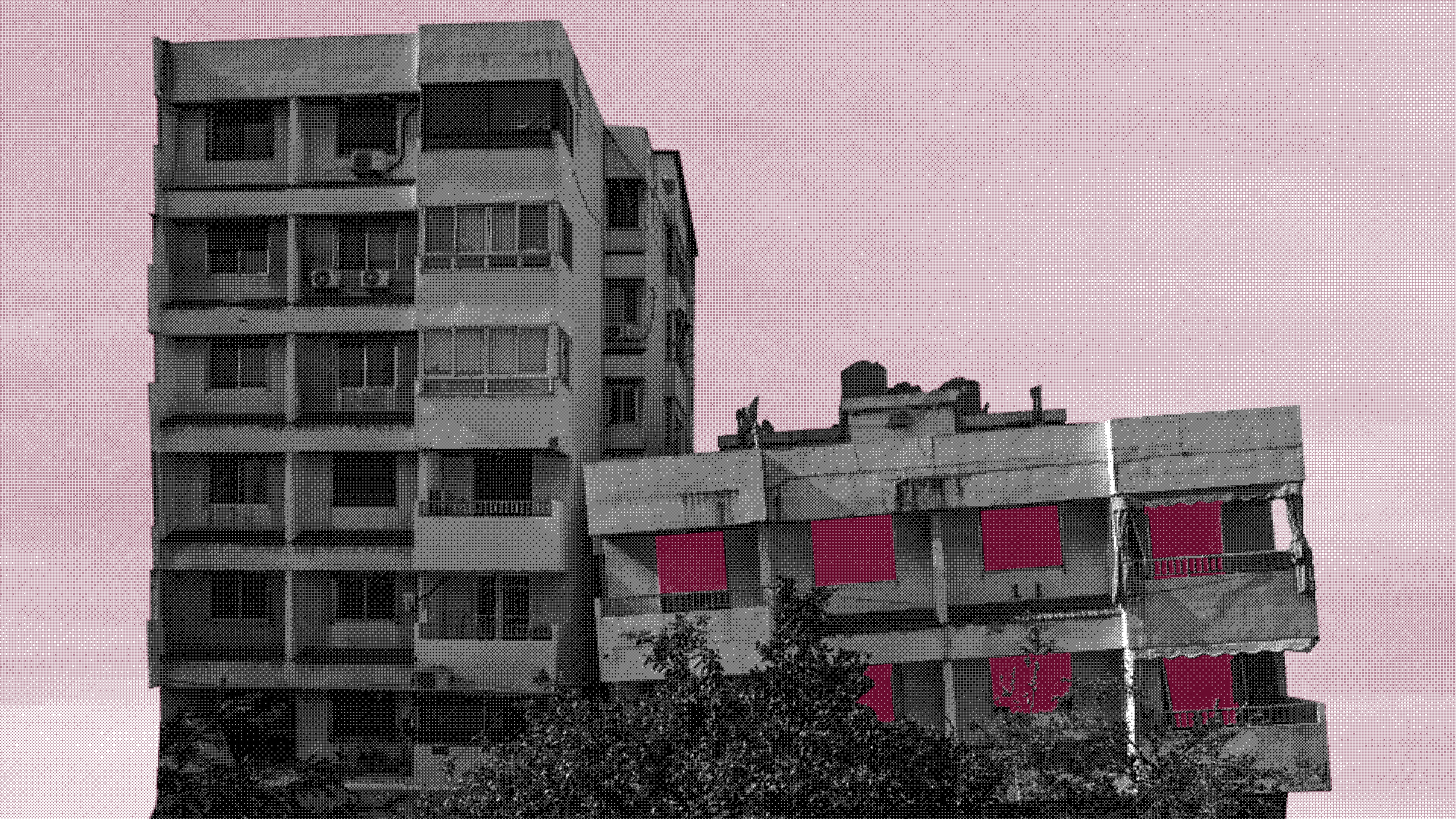
It is difficult to be surprised today by the collapse of buildings around the Lebanese territory, being aware of the amount of legal and material factors that have weakened and destabilized their structure, as well as the absence of official practical initiatives to verify the safety of existing and emerging buildings. Therefore, what we are witnessing today is the manifestation of years of military events, followed by measures that prioritize profit, with complete disregard for the safety of people and the environment.
Lebanon’s urban environment bears the deep scars of a long and turbulent history. The Civil War saw infrastructure and neighborhoods directly targeted. This internal conflict was compounded by repeated aggressions and invasions by Israel; in addition to the Beirut port explosion in 2020, as well as the repercussions of the earthquake that hit Turkey and Syria in 2022. In addition to the resultant destruction, the Lebanese state – at every juncture – favored neoliberal policies, leading eventually to erasure of urban fabrics, collapse of buildings, and the disruption of everyday life.
Today, urban environments in Lebanon are experiencing extreme physical degradation in what can be considered one of the country’s most devastating eras. As such, this dossier unravels some of the forces behind the numerous building collapses we have witnessed in the past months, documenting their impacts, and imagine alternative possibilities for more equitable urbanization paths. It includes articles and reports that attempt to uncover the structures that led to the deterioration of the built environment in Lebanon, the root causes behind the recent collapses, and to highlight the need to take appropriate measures to avoid further disasters. Additionally, we document collapse cases from different regions, shedding light on residents’ struggles in the absence of housing alternatives.

A Proposal to Address Building Collapses:
Filling the Legal Void Does Not Replace the State
Building collapses in Lebanon are no longer isolated incidents, but the result of a long accumulation of neglect and the state’s retreat from its responsibilities toward public safety. The latest draft law proposed ...