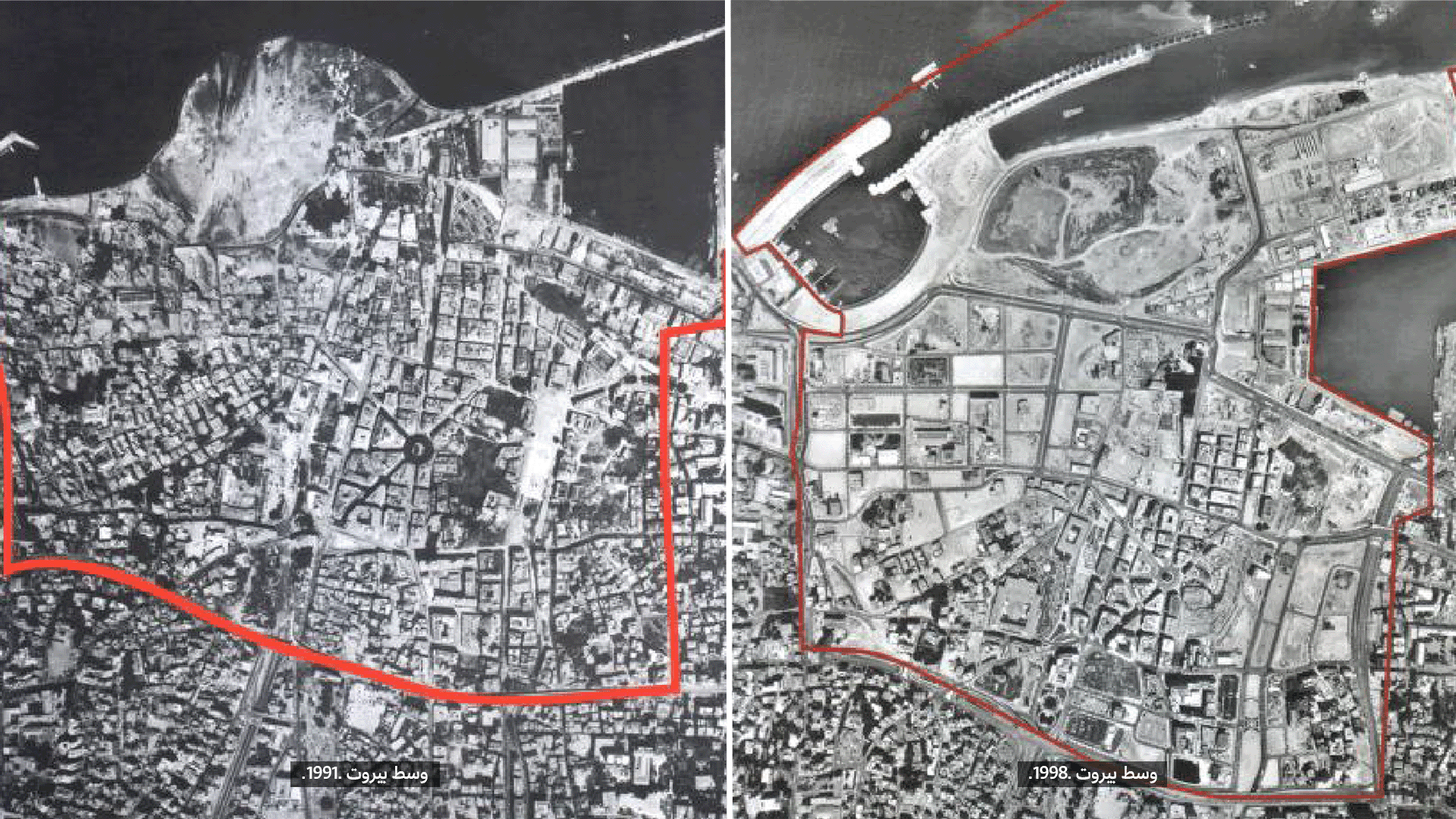
Solidere was established after the end of the Lebanese Civil War (1975-1990) to undertake the reconstruction of downtown Beirut, which is now known by its name. This company’s experience represents the neoliberal model of reconstruction, a model that has been subject to much criticism and questioning. After every reconstruction or real estate development project in Lebanon in recent years, and in more than one context, the topic of Solidere resurfaces in public debate amid fears of a repeat of its experience. The question has repeatedly been raised as to whether there is an attempt or plan to establish a “Solidere 2.” Today, these concerns are also resurfacing following the devastating war waged by Israel on Lebanon, beginning on October 8, 2023.
This article reviews Solidere’s experience with the aim of recalling it and rethinking the social and cultural repercussions of the neoliberal model it followed. It begins with a glimpse of downtown Beirut before the war and its post-war reconstruction plans. Second, it provides a summary of the legal and institutional framework within which the company was established and which enabled it to acquire land in central Beirut for real estate development, highlighting the privileges granted to the company by the state and the controversy it sparked. Third, the article highlights the design plan adopted by Solidere, focusing on how to deal with the existing urban fabric. Fourth and finally, the article examines the lessons learned from Solidere’s experience and how they can help us address the challenges of reconstructing areas destroyed by Israel in its ongoing war on Lebanon, despite the ceasefire agreement concluded on November 26, 2024.