Lebanon, and particularly the South, Beirut, and the Bekaa, is experiencing massive destruction of its infrastructure, buildings, spaces, and social and urban fabric as a result of the recent Israeli war. This has directly impacted people’s right to housing, delayed their return to their villages and neighborhoods, and made the return of life to devastated areas impossible.
Today, while other regions continue their normal lives, life has come to a standstill in most of the villages, areas, and neighborhoods targeted by the Israeli enemy in its recent war, intent on indefinitely destroying them, planning to sever social relations, shatter their urban fabric, and weaken the livelihoods of their residents.
Therefore, what has happened since the recent war compels us to work on two levels: the first is to push towards initiating the reconstruction process, without using it as a political tool for revenge against a political group, sect, or the residents of a region. The second is to open a serious public debate about reconstruction and involve the largest segments of the population in it, so that everyone’s needs are considered within a comprehensive and sustainable framework.
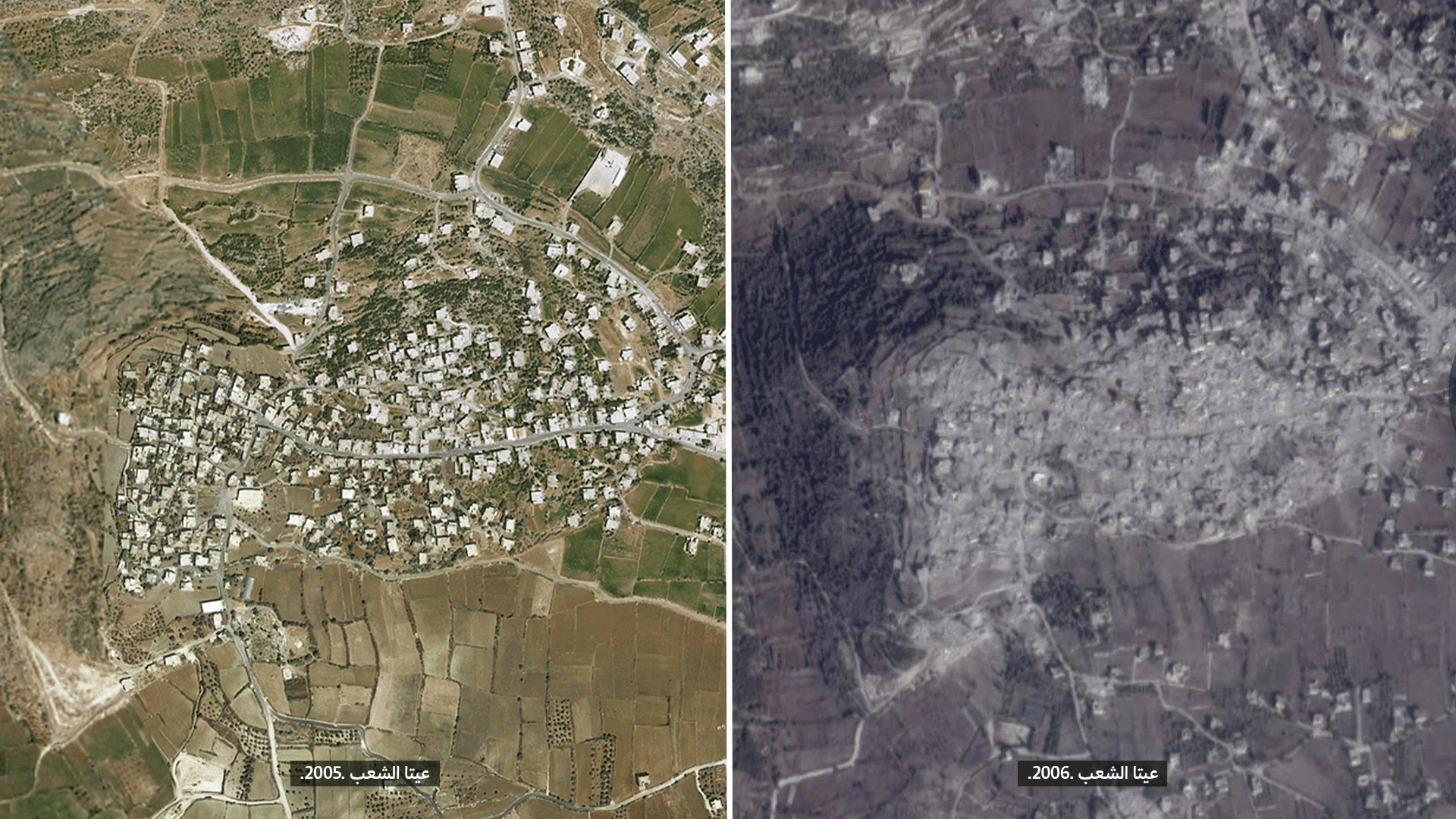
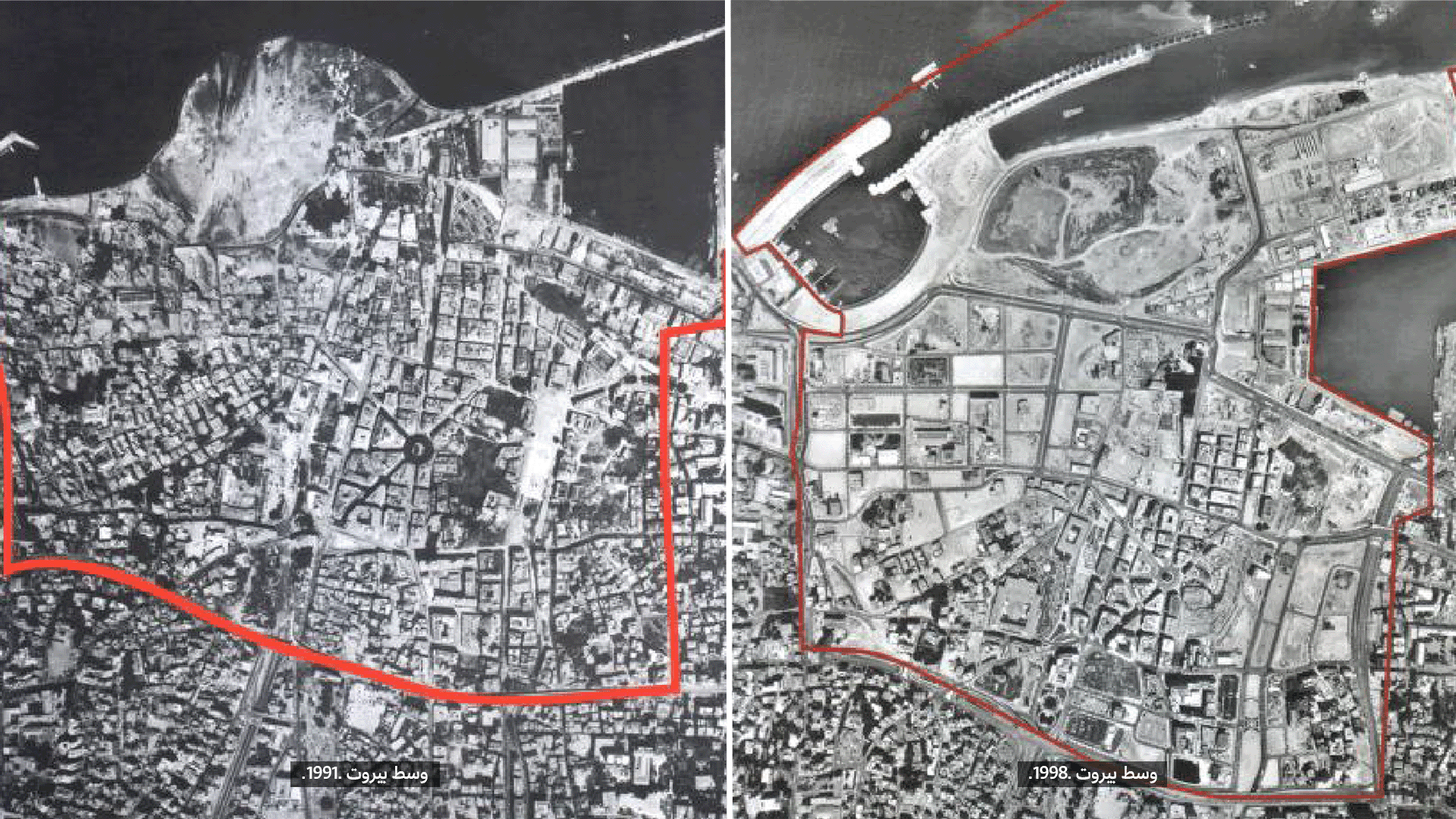
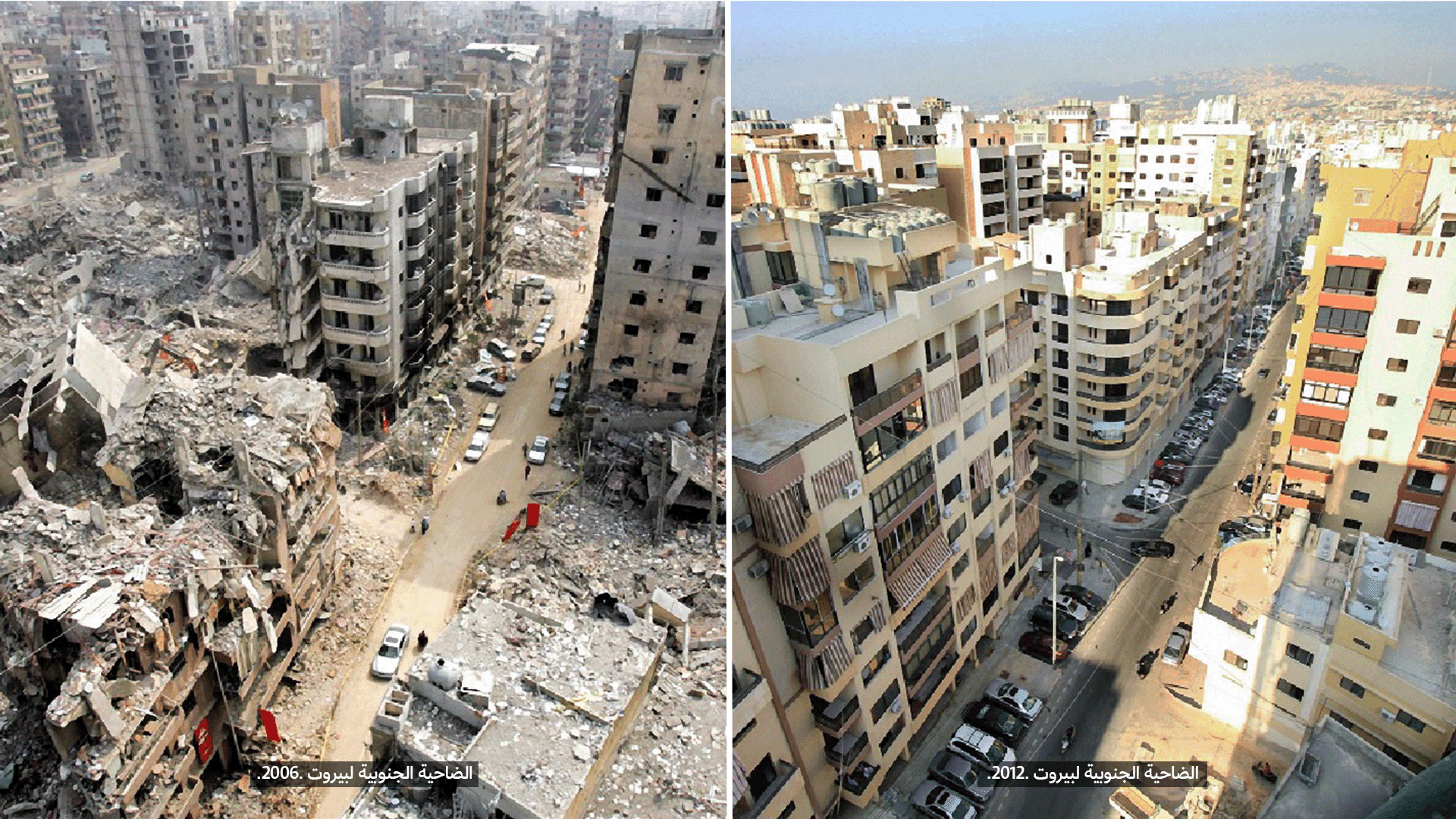
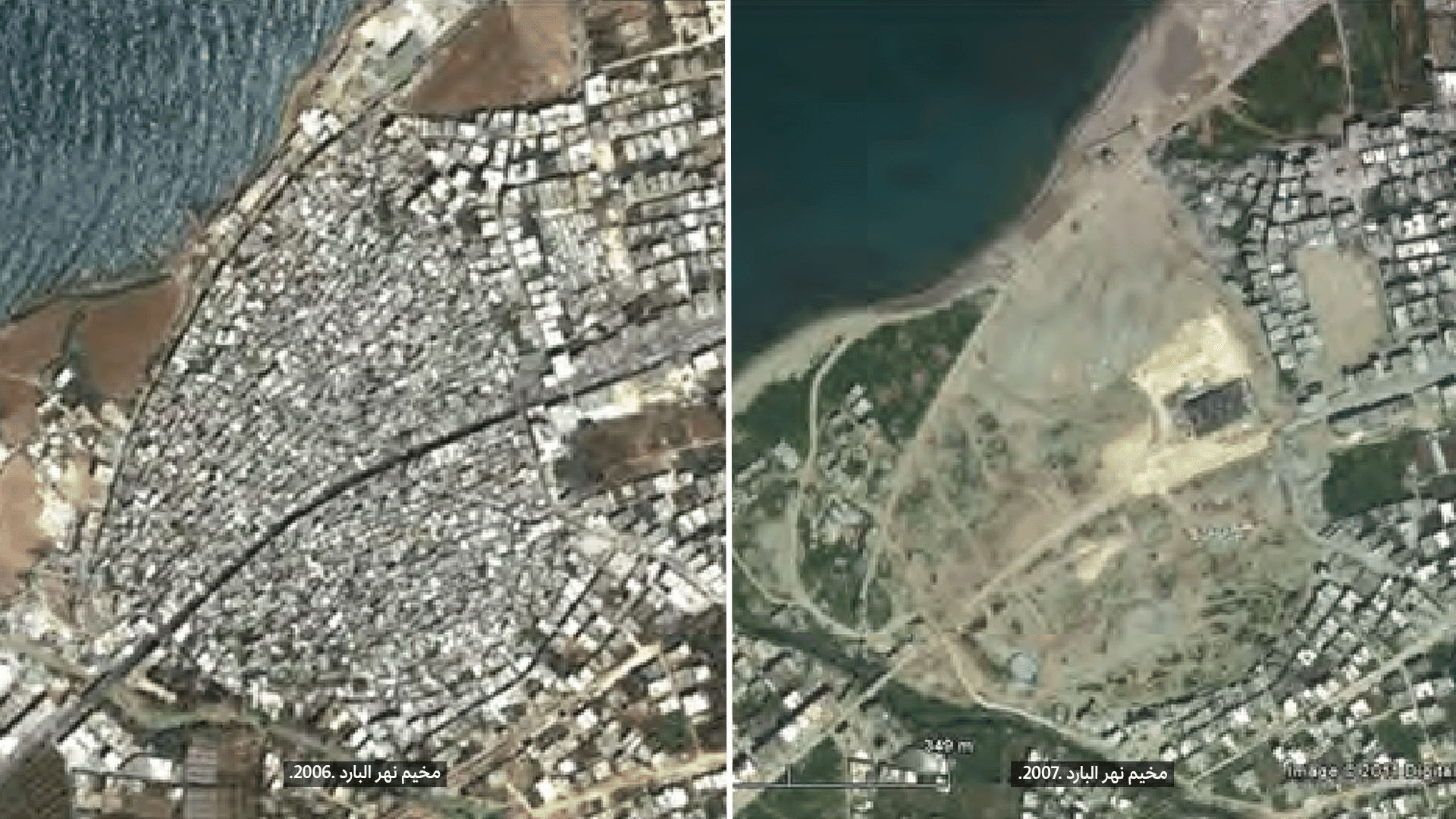
So that this reconstruction process does not end up being similar to the previous ones that have negatively impacted the reconstructed area and its surroundings, from the reconstruction of downtown Beirut, to the reconstruction of the southern suburb (Waad Project), to Nahr al-Bared and Aita al-Shaab, experiences that we must read in detail and learn from.
As part of the “Hiwar-Madine-Nas” seminar series which we launched in 2022 in partnership with the Institut Français du Proche-Orient (IFPO), we launched the fourth edition this year, titled “Reconstructing Bilad el-Sham” kicking off with the seminar “Reconstruction in Lebanon: Experiences and Lessons.” We present this dossier as a result of the papers and discussions presented during this seminar.
The dossier brings together urban planning researchers and activists Mona Khechen, Hana Alameddine, Abir Saksous-Sasso, Nadine Bekdash, Ismail Sheikh Hassan, and Rana Hassan. It begins with four experiences, each representing the state’s abdication of responsibility and its withdrawal from the picture: the reconstruction of downtown Beirut and its contracting out to a private company; a political party’s management of the reconstruction of the southern suburbs after the 2006 israeli war; the dominance of external donors over the reconstruction of southern villages also post 2006; and finally, the reconstruction of Nahr al-Bared camp within a local framework in partnership with UNRWA.
Although the state is absent from each of these experiences, each reflects the state’s economic and political orientation. Each model has its own context, era, and ideological and political orientations.
The four papers focus on the importance of transparent damage surveys, given their importance and ability to guide decisions regarding whether to complete the demolition process or preserve the urban and social fabric. In her paper, Mona Khashen argues that the post-civil war reconstruction of downtown Beirut was used as a tool to complete the displacement of people and shift economic relations in downtown Beirut, especially since the damage was not as extensive as what was demolished and the downtown was not as empty of residents as rumored.
The second paper, originally written by Abir Saksouk Sasso, Nadine Bakdash, and Ismail Sheikh Hassan and published in “alMuhandes”, is here rewritten to address reconstruction in Aita al-Shaab on Lebanon’s southern border, and the challenges it had posed in the absence of a state and the lack of clarity on the form of reconstruction and compensation,as well as a possible alternative approach.
In the third paper, Alamuddin focuses on the Waad experience, the issue of the need for rapid reconstruction, and the challenges that resulted from the inability to improve the shared space within the framework established by the party overseeing the process.
For her part, Rana Hassan discusses the Nahr al-Bared camp reconstruction experience, based on participatory planning and consulting with the largest possible number of residents. Hassan also opens a discussion about urban planning as a tool for negotiating between the various interests of residents.
Thus, the following questions arise from the various papers presented in the dossier: What role do we need for the state at this stage? Do we need a comprehensive legislative framework that simultaneously engages with reality and its changes, taking into account the scale and various types of destruction and the resulting numerous challenges, depending on the geography, location characteristics, nature of ownership, and the legitimacy of construction? Does the reconstruction process require a comprehensive framework for state institutions, rather than disparate projects that duplicate efforts and divide work within municipal boundaries, contradicting the natural, geographical, and social extension of cities and villages?
It is essential for the state to play its role as the spearhead of this process, because it is the only entity capable of rebuilding this devastation and establishing a path to comprehensive recovery. It is also the only political structure capable of playing a political role in repositioning the population as citizens with rights, and in establishing steadfastness and resistance as an integral part of the tools for preserving sovereignty, through the reconstruction and development of devastated areas.
Contrary to current talk of reclaiming a bygone glory through past reconstruction projects, this dossier will present some of these experiences that Lebanon has undergone and their impact on the people, the land, and the social and urban fabric, with the hope of drawing lessons for the upcoming reconstruction process in the face of displacement, plunder, and exclusion projects. In light of the above, we hope that this dossier will contribute to a discussion around the form of reconstruction Lebanon needs today. Lebanon faces a challenge everyone in the state is desperate to avoid: a comprehensive reconstruction that includes addressing the war’s devastation and the shape of the state, the economy, and social relations. Ultimately, the reconstruction process will be nothing more than an expression of the political and economic choices of this phase, the shape of which no one yet knows.