
Project team
Research and Writing: Christina Abou Rouphael & Yara Abdelkhalek
Map and graphs design: Asmaa Ghrawi & Imad Kaafarani
Participants
Participated in the workshop entitled “The Impacts of Ecocide and Urbicide in Kfarkela” held in June 2025:
From Public Works Studio: Tala Alaeddine, Christina Abou Rouphael, Yara Abdelkhalek & Jana Nakhal
Participants: Hadi Awada, Ali Chaer, Imad Chiit, Ali Abdallah, Hassan Chiit, Zeinab Jahjah, Tarek Serhan, Hassan Serhan, Maher El Sayed, Farah Hammoud, Mohamad Serhan, Afifeh Serhan & Ranwa Yehya
Participated in the closed session entitled “Ecocide and Urbicide in South Lebanon: Towards Just Return and Recovery” held in October 2025:
From Public Works Studio: Abir Saksouk, Tala Alaeddine, Christina Abou Rouphael, Yara Abdelkhalek & Kamila El Khechen
Participants: Sateh El-Arnaout, Chief Technical Advisor, Presidency of Council of Ministers; Houssein El Sakka, Head of the Nabatieh Department at the Ministry of Agriculture; Eléna Maalouf, Representative of the National Council for Scientific Research in Lebanon (CNRS); Hadi Awada, Imad Chiit & Ali Abdallah, residents of Kfarkela; Naeem Aoun, Board Member of the Farmers’ Association in the South;Jamal Cheaib, Director of Public Relations and Activities at the Weta’awanu Association; Hassan Chiit, Representative of the Residents of Southern Border Villages committee; Ali Swaidan, Lawyer in the Strategic Litigation Department at the Legal Agenda; Hussein Shaaban, Journalist in the Legal Agenda’s Press Department; Sarine Kkarajerjian, Program Director of Environmental Politics at the Arab Reform Initiative; Zeinab Farhat, Representative of the Arab Reform Initiative; Corinne Jabbour, Representative of the Jibal; Ornella Nohra, Urban Planning Coordinator at UN-Habitat; Mourad El Ayash & Ghassan Makarem, representing the Agri-Movement in Lebanon; Abdul Halim Jabr, Urban Planner; Samar Morkos, Representative of the Environment and Sustainable Development Unit (ESDU) at the American University of Beirut; Ramzi Kaiss, Representative of Human Rights Watch; Mona Khechen, Urban Planner and Independent Researcher; & Ali Abi Nasif, Representative of the Lebanese Reforestation Initiative.
In collaboration with/ With the support of
With the support of the Arab Reform Initiative (ARI)
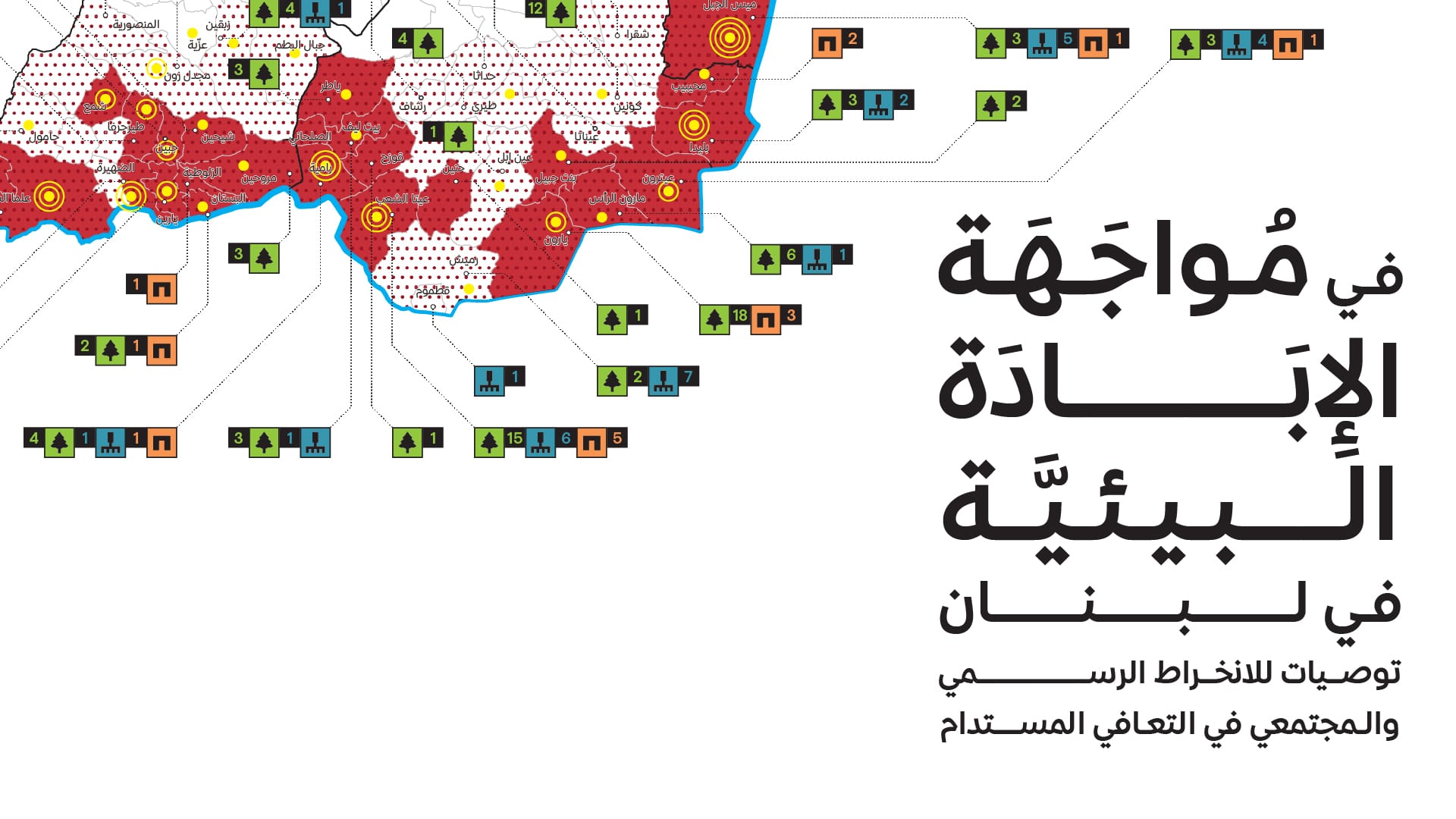
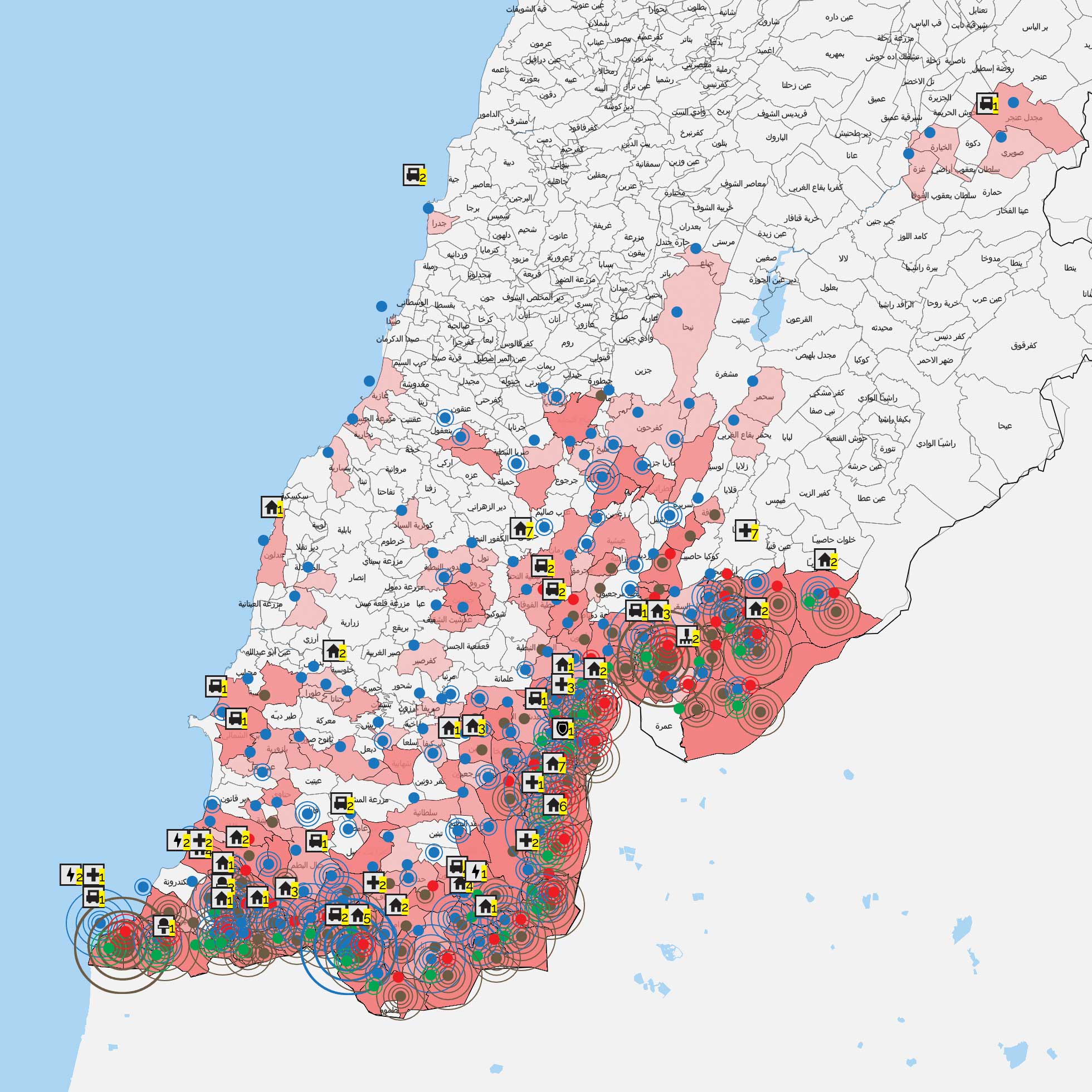
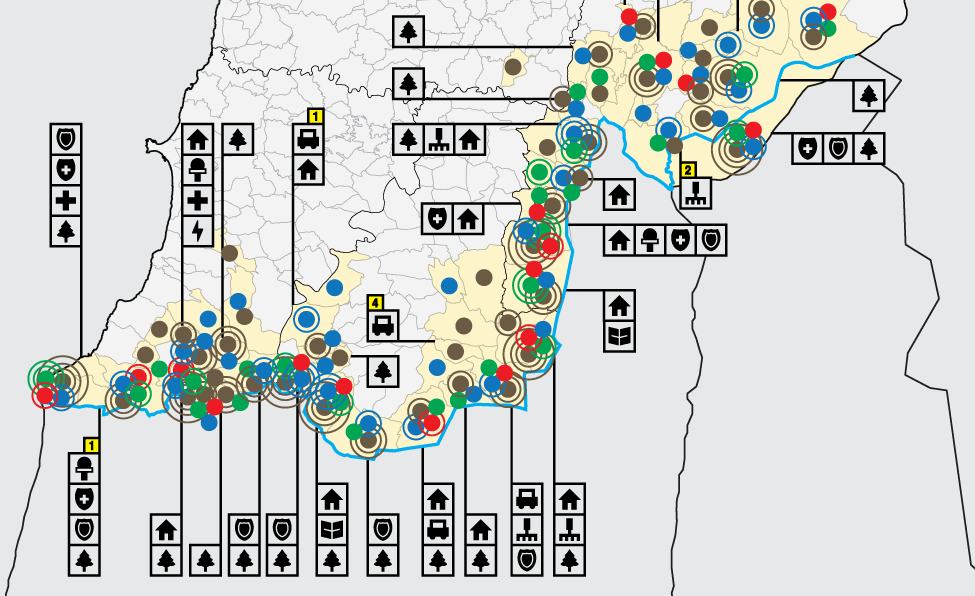
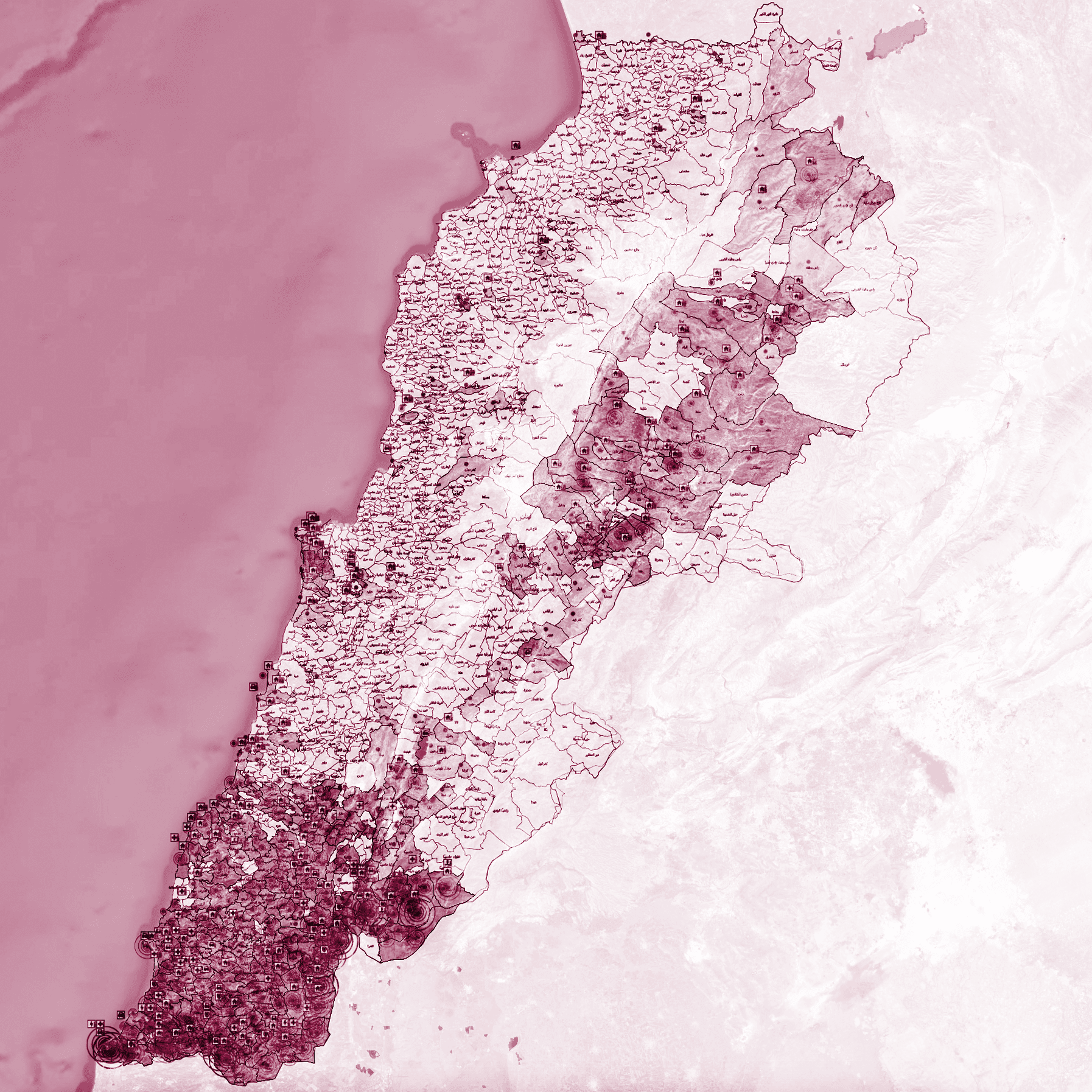
Since October 8th, 2023, with the onset of the Israeli war on Lebanon, and its escalation on September 23rd, 2024, leading up to the ceasefire agreement on November 27th, 2024, the border villages have been subjected to brutal targeting, resulting in the deliberate destruction of entire villages in the south and ecocide. Israeli forces targeted infrastructure and heritage sites, destroyed forests, agricultural lands, and irrigation networks, causing severe damage to homes, trees, crops, soil, and the natural and agricultural environment, in addition to significant losses in the local economy. These actions aimed to impose forced mass displacement and to transform the border area into scorched land or a “buffer zone” unsuitable for human life, nature, or agriculture, amid implications that it may be turned into an “economic zone” emptied of its inhabitants.
In this context, over the past year, Public Works Studio has conducted monitoring, research, workshops, and interviews to assess the damages resulting from the ecocide and urbicide carried out by the Israeli occupation in southern Lebanon, and to identify social, spatial, and environmental priorities. Public Works has also monitored and reviewed existing reconstruction policies and frameworks, clarifying the responsibilities of the Lebanese state and local authorities in responding to this catastrophe.
Accordingly, we focused on Kfarkela, one of the affected border villages, where a workshop was organized bringing together a group of local residents. The workshop created an important space to understand challenges and discuss means for return and reconstruction. It also helped shed light on the environmental and agricultural priorities in the area. Additionally, Public Works Studio organized a collective discussion aimed to present the research findings and foster the development of joint recommendations and demands among participants including affected citizens, farmers, activists, civil society organizations, researchers, and decision-makers, focusing on the priorities for return, reconstruction, and addressing the environmental damages.
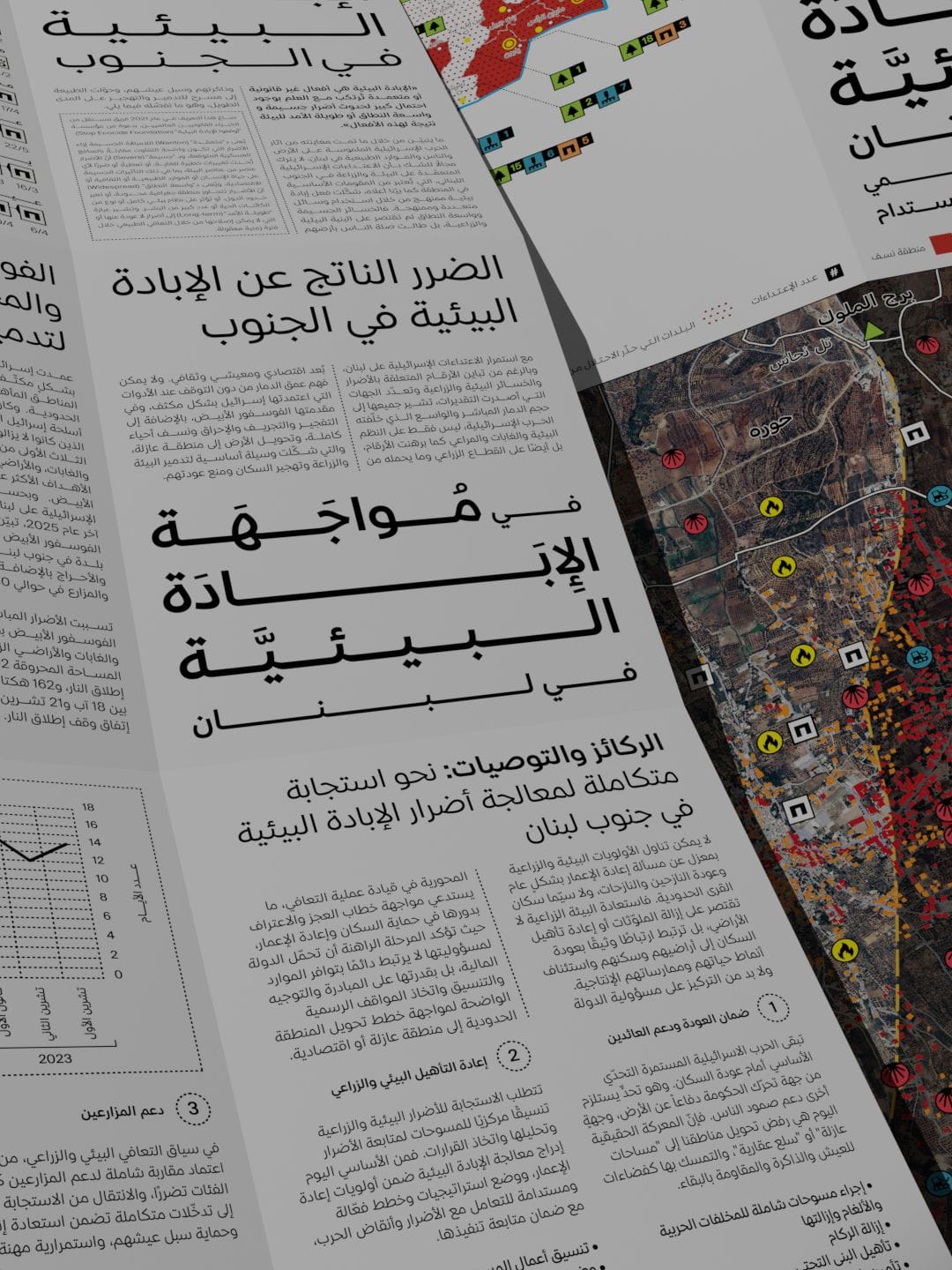
This process culminated in the development of a policy paper examining the ecocide inflicted on southern Lebanese villages, with the aim of developing policy recommendations on how the Lebanese state, local authorities and communities in South Lebanon, and relevant civil society organizations can engage in addressing the damage resulting from the ecocide committed by Israel in Lebanon.
The paper documents the environmental and agricultural damage across southern villages, with a particular focus on the most heavily affected border towns that have been subjected to different forms of attack and destruction, and then zooms in on the border town of Kfarkela as a case study. It also seeks to draw lessons from the environmental interventions undertaken by the Lebanese state following the July 2006 war, and to assess current reconstruction and recovery frameworks and policies, alongside local community initiatives from an environmental perspective, in order to clarify the responsibilities of the various concerned actors. In conclusion, the paper puts forward policy recommendations that we consider essential, yet open to revision and development, to confront environmental and agricultural ecocide and to strengthen pathways for recovery and return.
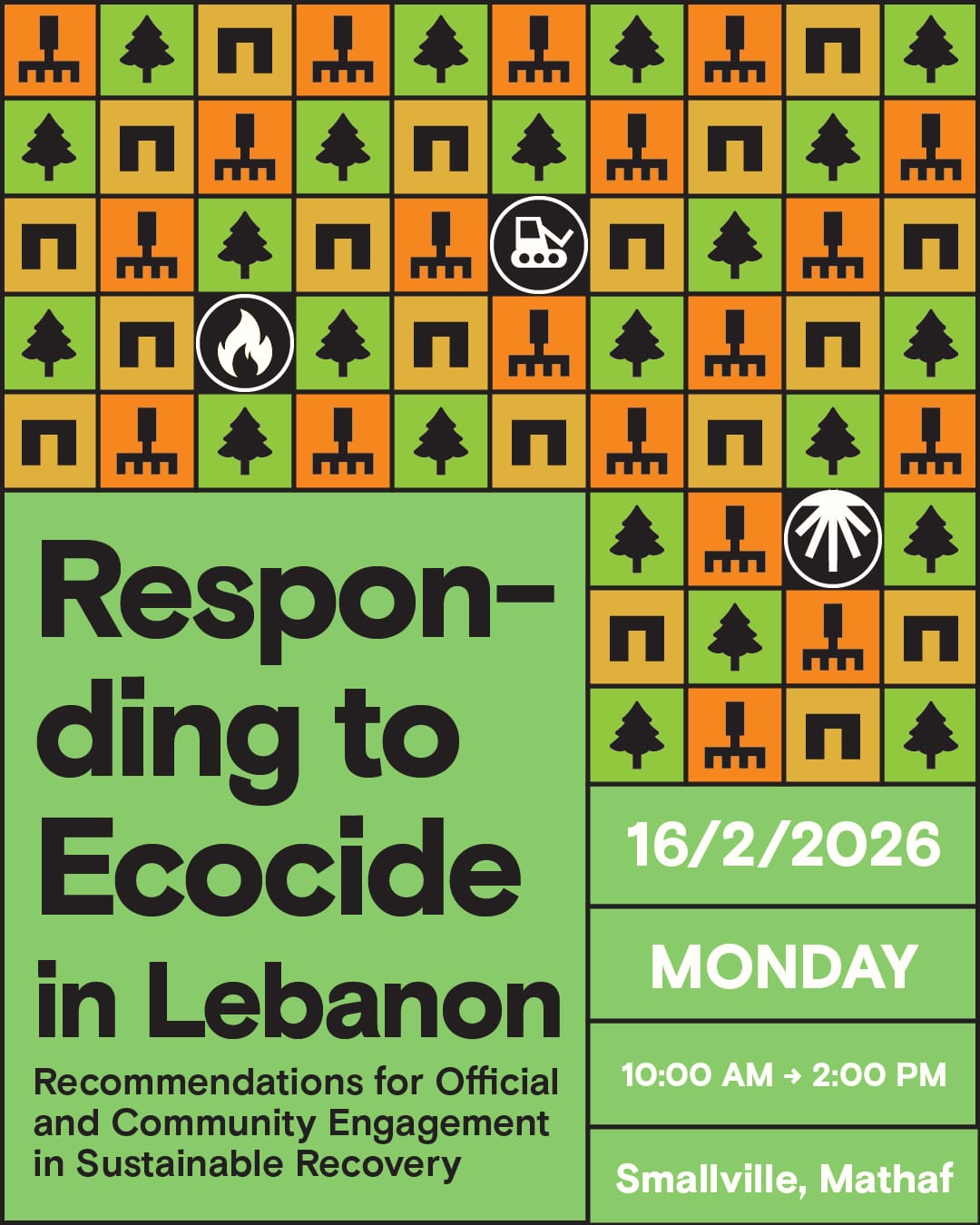
This process was further advanced through the organization of a public seminar to launch the policy paper. This event created a space to present the paper’s key recommendations and launch a discussion on translating them into participatory advocacy pathways for ecocide, reconstruction, and return in Lebanon, through collaboration between affected communities, policy makers, researchers, activists, and stakeholders, turning research insights into practical tools for policy and action.

The Exemptions and Reconstruction Law: Not an Alternative to a Comprehensive National Plan
More than seven months after the ceasefire in Lebanon, on June 30, 2025, the Parliament passed the first law related to reconstruction in response to the Israeli war on Lebanon. Ultimately, the law ...