
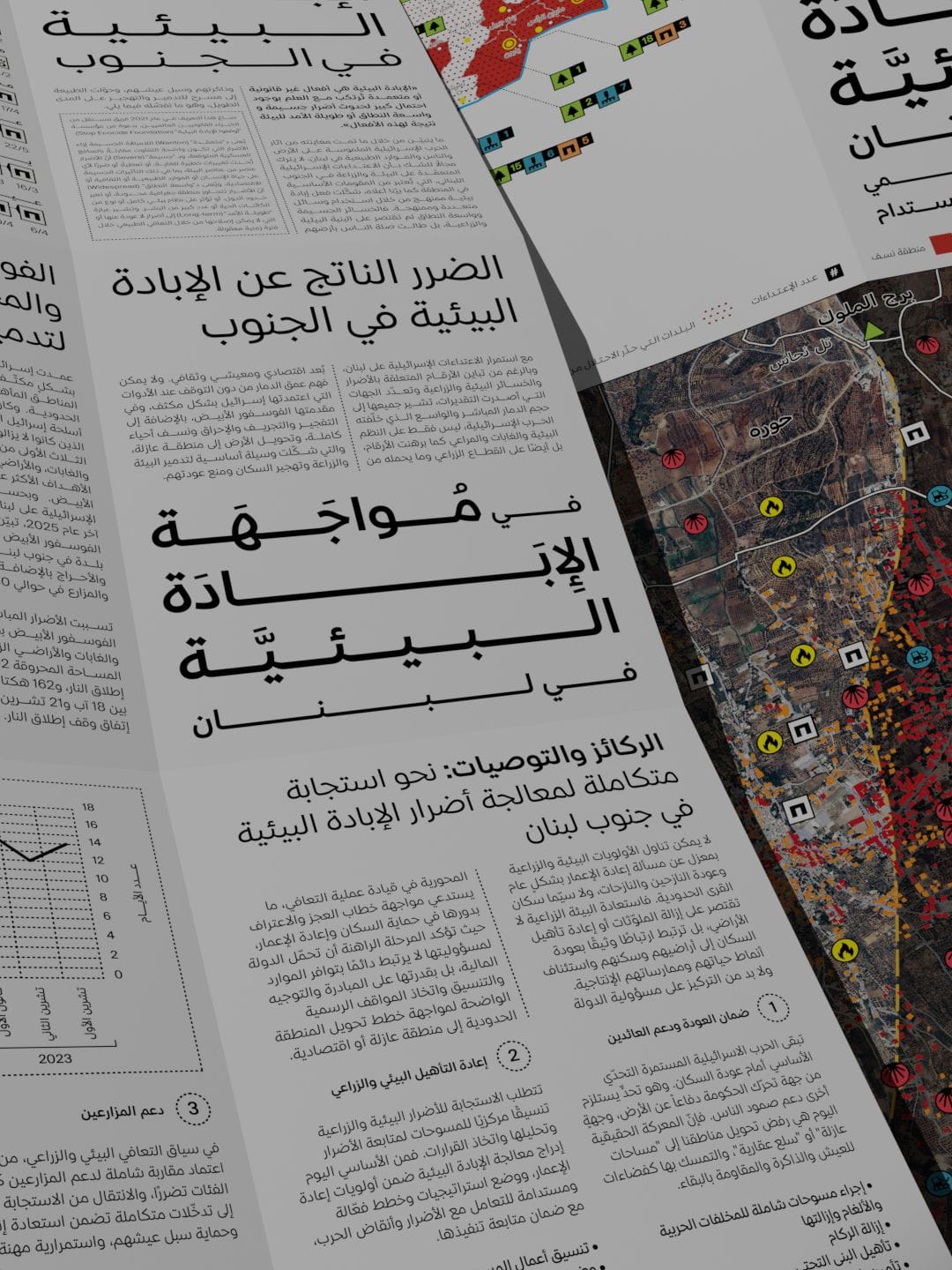
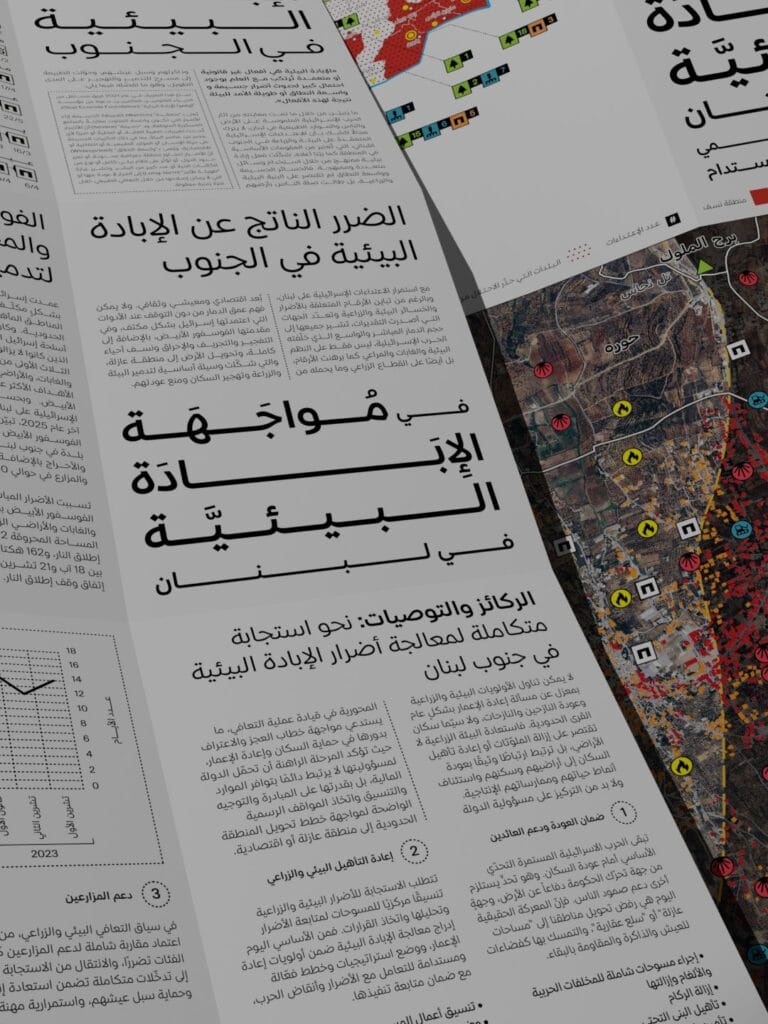
Since 8 October 2023, following the Israeli war on Lebanon and the ongoing ceasefire violations, the southern regions have endured widespread attacks on homes, infrastructure, public facilities, cultural landmarks, forests, and agricultural lands. Trees, crops, soil, and water resources have suffered severe damage, the local economy has been hit hard, and several border villages have been nearly destroyed—amounting to deliberate ecocide and urbicide.
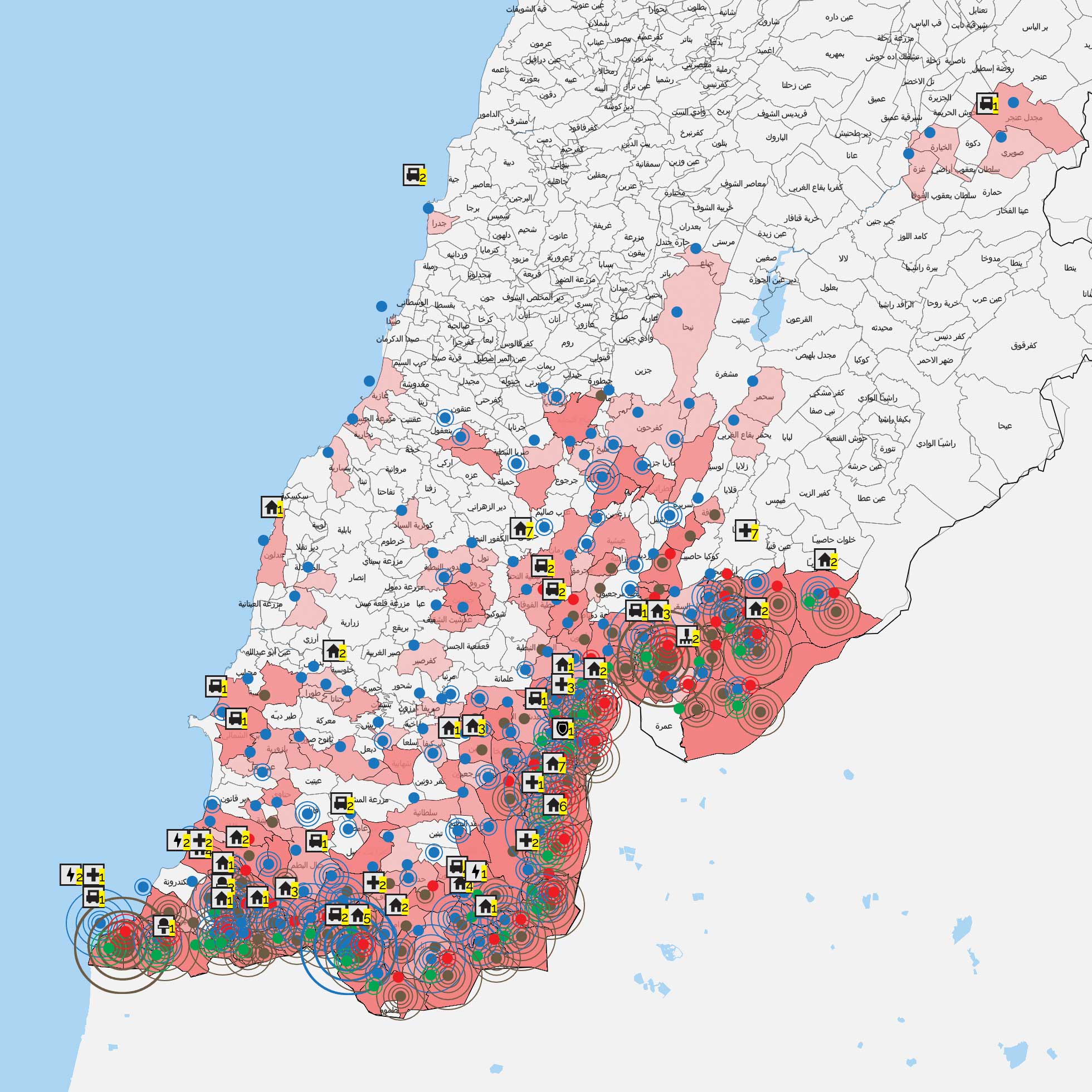
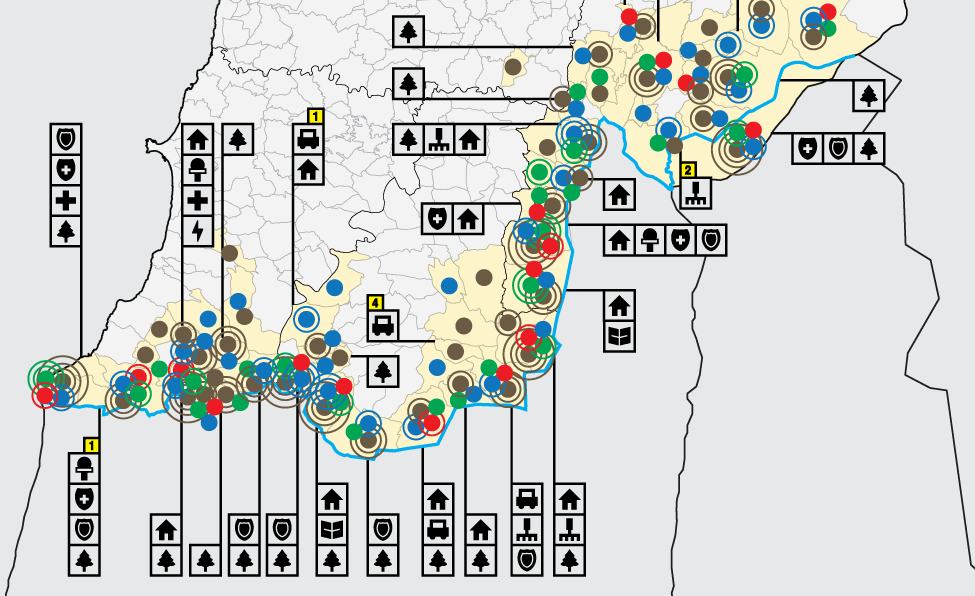
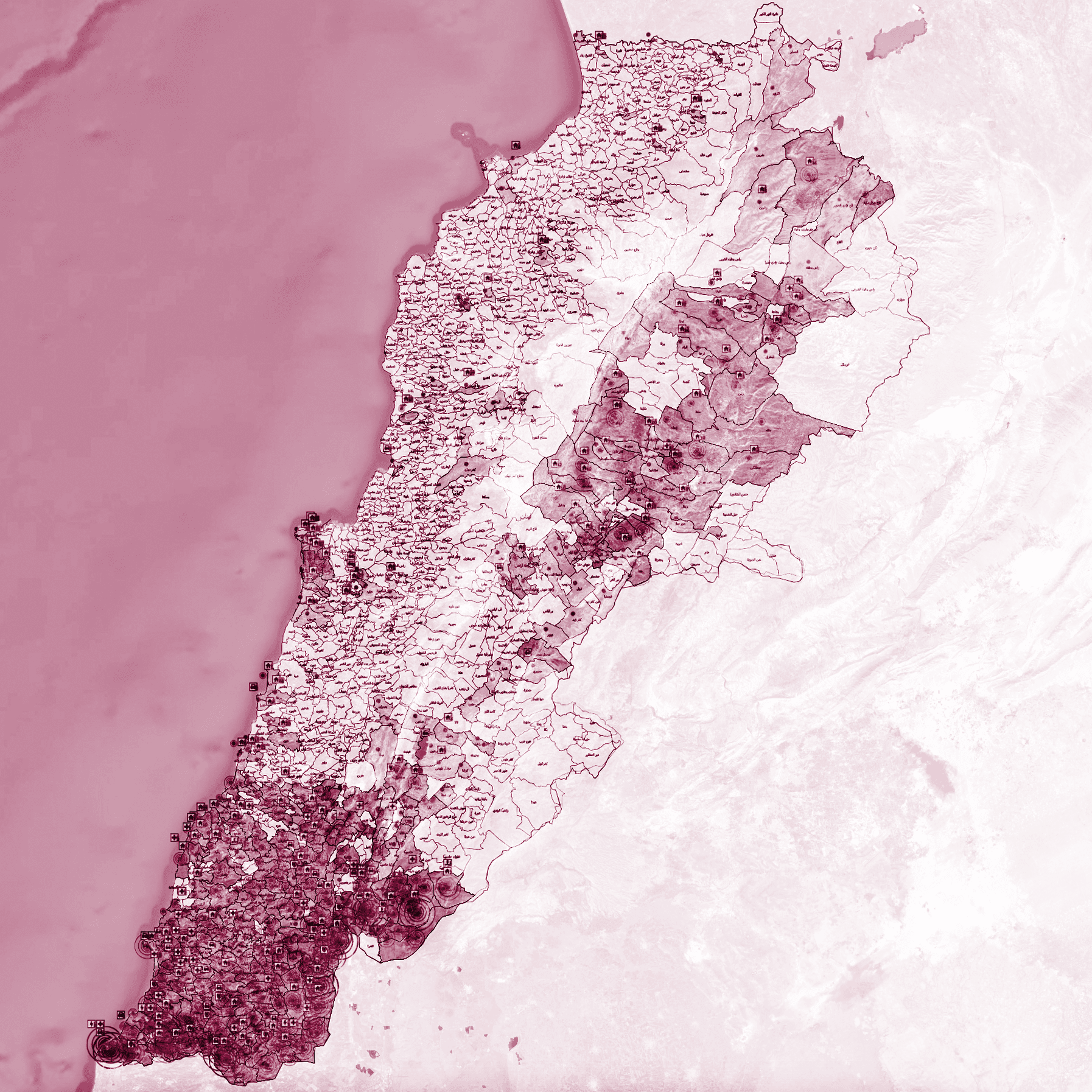
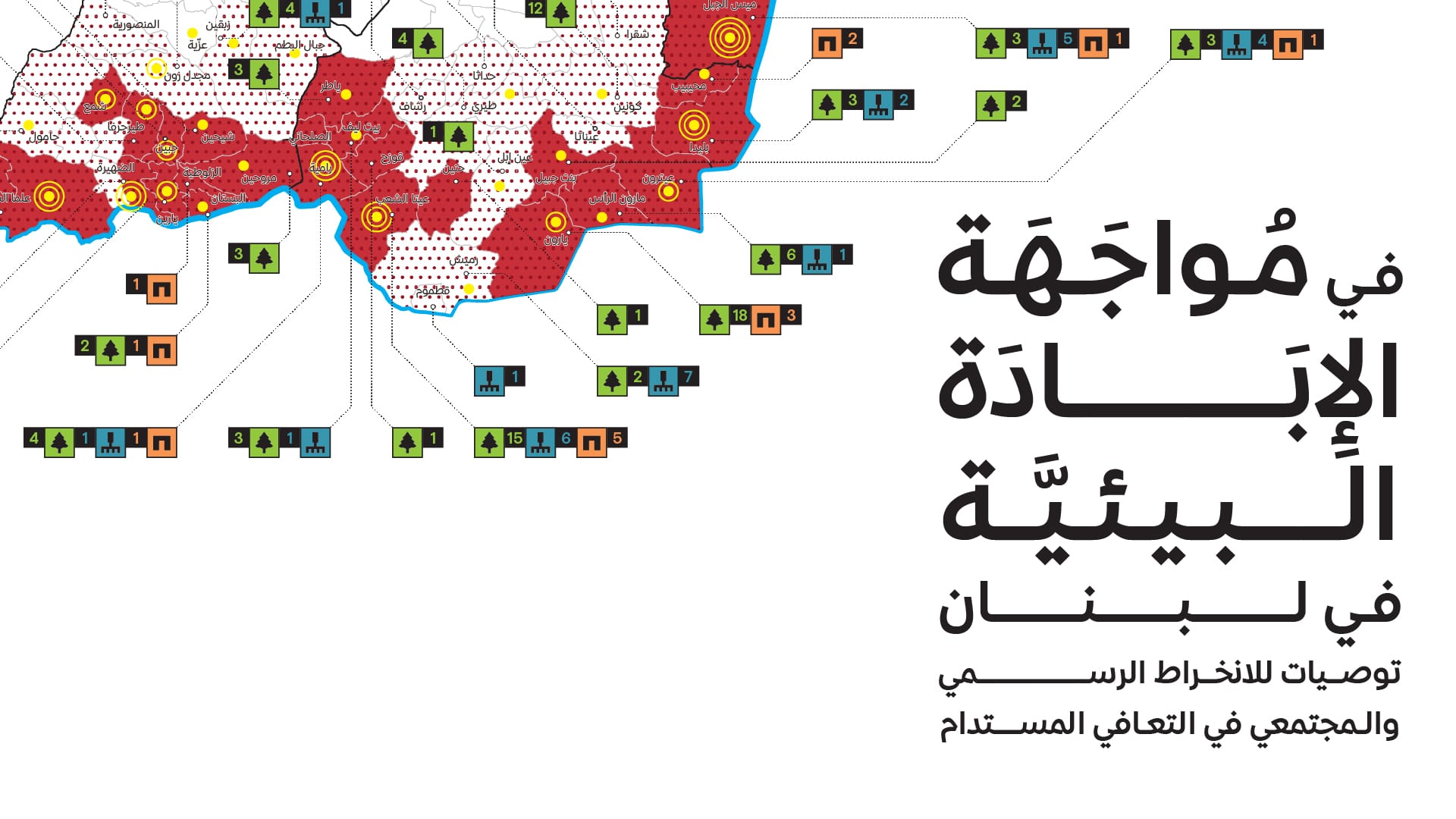
In this context, Public Works Studio developed a policy paper to assess current policies and propose recommendations on how the Lebanese state, local authorities and communities in southern Lebanon, and civil society organizations can engage in addressing the damage resulting from the ecocide committed by Israel in Lebanon. This publication provides a simplified summary of the paper’s main findings and recommendations, including the key assets of southern regions, the damage resulting from ecocide in the south, a review of the history of Israeli attacks on southern Lebanon and its border villages, and a concise presentation of the pillars and recommendations we developed in the paper. It also includes maps documenting Israeli attacks across southern Lebanon and in the town of Kfarkela.
The publication was distributed during a public event launching the policy paper, as a tool to open discussion on participatory advocacy pathways to confront ecocide in southern Lebanon, and to disseminate it widely in order to engage diverse stakeholders, including affected communities, decision-makers, researchers, activists, and other concerned actors.

The Exemptions and Reconstruction Law: Not an Alternative to a Comprehensive National Plan
More than seven months after the ceasefire in Lebanon, on June 30, 2025, the Parliament passed the first law related to reconstruction in response to the Israeli war on Lebanon. Ultimately, the law ...