
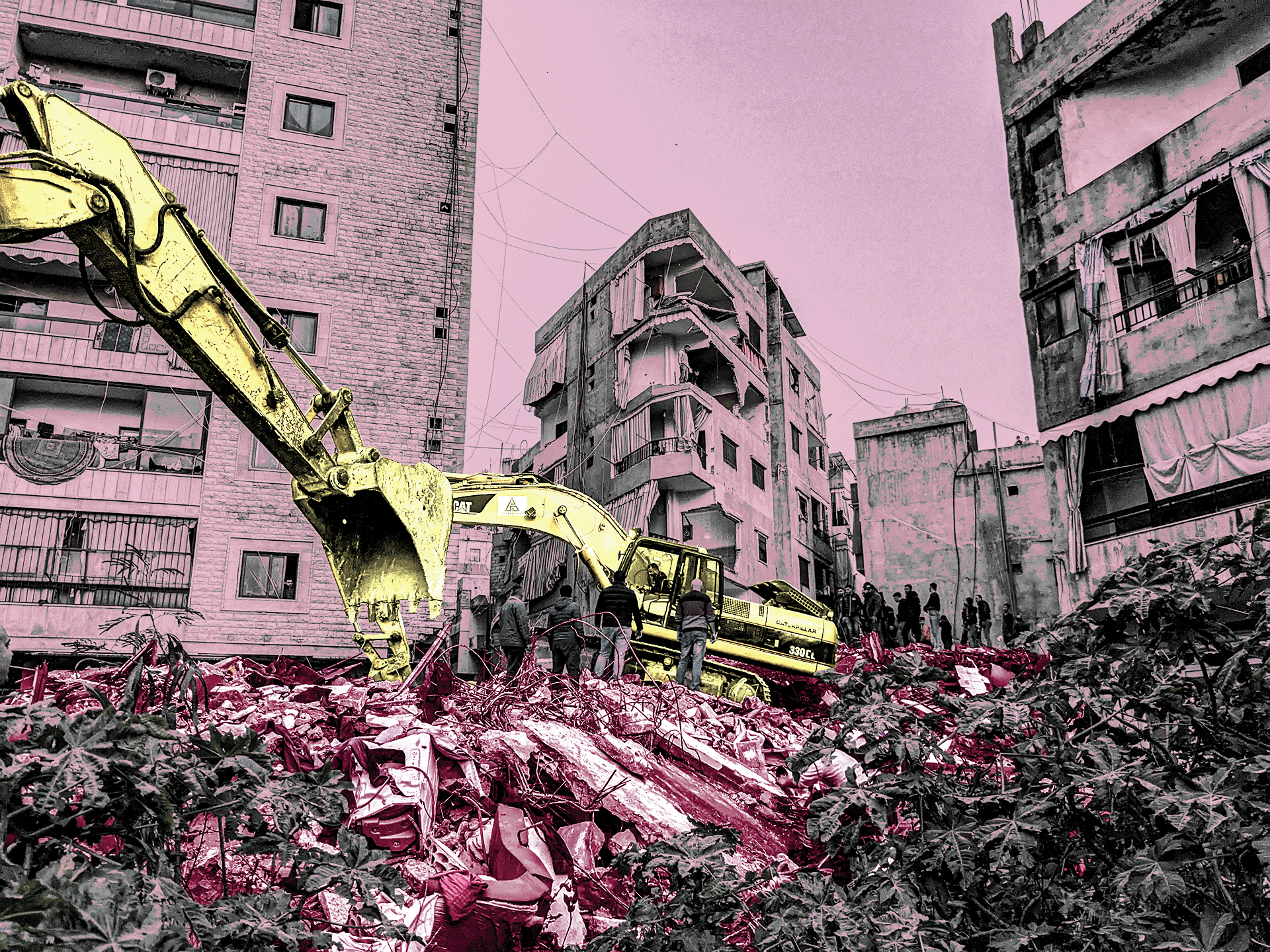
Lebanon’s collapsing buildings crisis is often treated as a series of isolated incidents., Aa building crumblesfalls in Tripoli, cracks appear on walls in Beirut, families evacuate overnight, and life moves on until the next collapse. But these are not accidents. They are the visible outcome of decades of neglect, repeated wars, economic collapse, and the gradual withdrawal of the state from its responsibility toward cities and residents.
Across Tripoli, Beirut and its suburbs, and the South, thousands of people still live in buildings weakened by accumulated crises, the civil war, the 2006 war, the Beirut port explosion, the 2023 earthquake, and ongoing attacks since 2023. Entire neighborhoods lack proper maintenance, monitoring, or early intervention. Between 2019 and 2026, at least 34 buildings collapsed across Lebanon, most in Tripoli and Mina, causing dozens of deaths and leaving many residents in constant fear.
In this context, deputy Ihab Matar introduced a draft law in January 2026 to regulate the restoration of at-risk buildings. It organizes the roles of municipalities, owners, engineers, occupants, and private financiers, and acknowledges a key reality that public safety is a state responsibility.
Yet the proposal still treats the crisis as something to manage rather than fully address. The state remains mainly supervisory, without direct funding or a national rehabilitation policy. Instead, it relies on private incentives such as reduced fees and the possibility to add additional floors to attract investment.
In practice, rebuilding becomes tied to financial feasibility rather than urgent public safety. Decisions about repair and redevelopment risk being shaped by profitability rather than social need, affecting who stays in place and who is displaced.
The proposal also exposes an imbalance between ownership and housinghabitation. While it recognizes different types of residents, those most exposed to danger remain largely excluded from decision-making and may be displaced without strong guarantees of housing or return.
Ultimately, Lebanon’s collapsing buildings reflect more than structural failure. They reveal a deeper crisis of governance, weak institutions, fragmented planning, and the absence of a real public policy for urban safety.

انهيارات المباني في طرابلس تسابق أصحاب القرار:
يتناول هذا التعليق قراءة نقدية لخطة الطوارئ الحكومية والمقرّرات الحكومية المرتبطة التي أُقرّت عقب سلسلة انهيارات المباني الكارثية في طرابلس مطلع عام 2026، متتبعاً مسار تطبيق بنودها ميدانياً عبر الجهات المعنية، وخصوصاً السلطة ...