
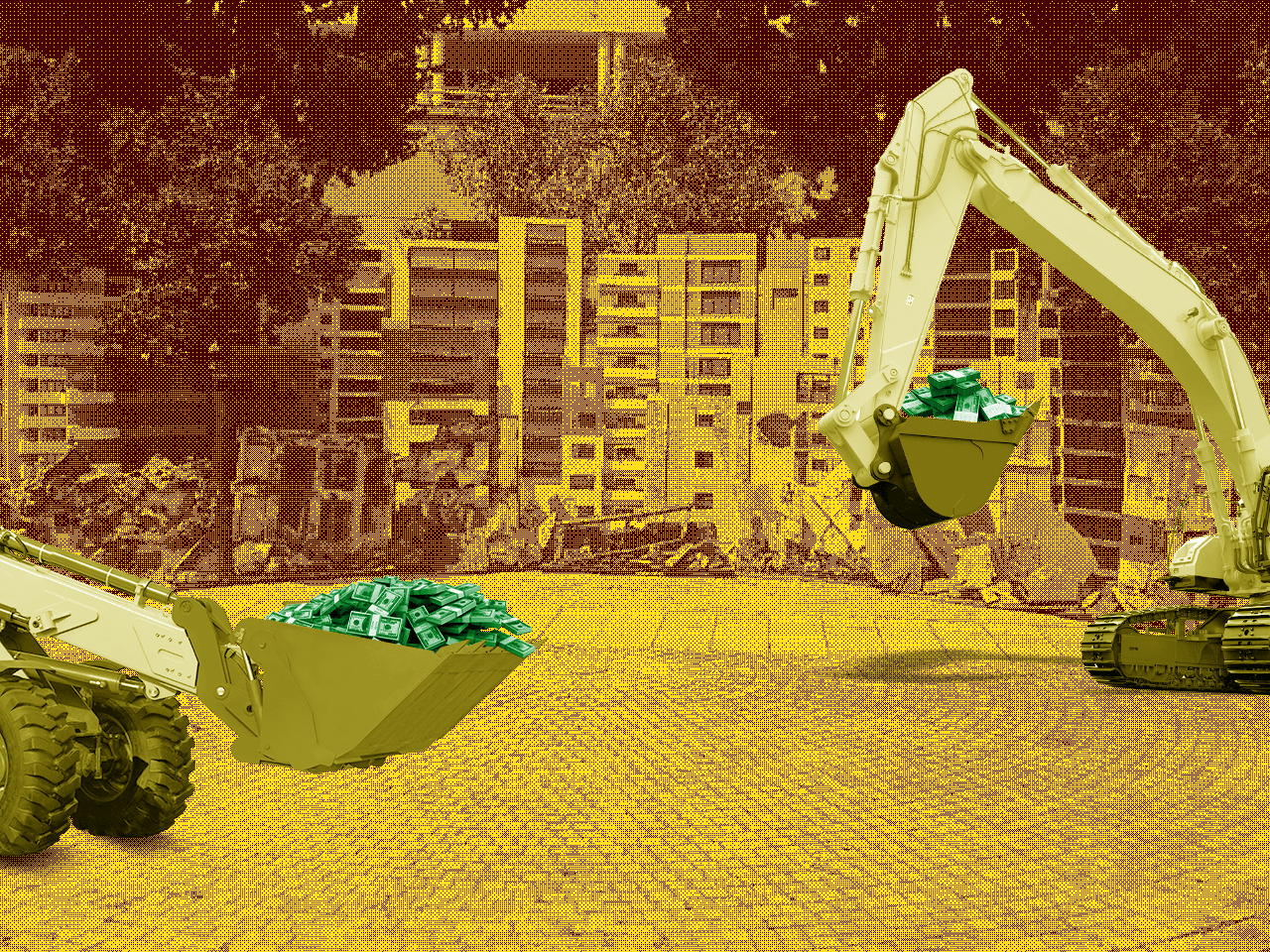
Amid Lebanon’s worsening reconstruction crisis, a dominant discourse has emerged that justifies government paralysis through claims of fiscal incapacity, institutional decay, and a weakened banking sector, urging a “realistic” acceptance of the situation. Yet, this logic, rooted in the notion of state incapacity, ultimately reflects a retreat from public responsibility and a withdrawal from the state’s essential role. Today’s circumstances require a different approach, one that recognizes that accountability does not depend solely on financial resources but on the state’s ability to take initiative, provide direction, and adopt a clear stance. Strengthening official and military presence, particularly in the southern and border areas, is key to reasserting state responsibility in reconstruction.
In this context, it is crucial to look at how reconstruction efforts have progressed on the ground. Building on Public Works Studio’s monitoring of recovery efforts following the Israeli war on Lebanon, launched after the November 27, 2024 ceasefire, this article reviews key developments in reconstruction policies between July 15 and November 5, 2025.
After months of stagnation and a slow start to recovery, limited funds have begun to flow, mostly as small-scale loans covering only part of the actual needs. Nearly a year after the ceasefire, official action has amounted to a partial law passed in June 2025 granting exemptions to affected residents, without establishing a comprehensive recovery framework. While scattered initiatives have emerged across ministries, a national recovery strategy only recently took shape. Developed by the ministerial committee, it focuses on three tracks: displacement and housing, reconstruction, and socio-economic development, with an initial allocation of $500 million. Yet the strategy remains short-term, donor-dependent, and excludes environmental recovery and border village reconstruction, while sidelining affected communities from decision-making. In the absence of coordination and amid weak local financing, state efforts remain fragmented and delayed, exposing the lack of a coherent, long-term vision for reconstruction.
Read the full Article in Arabic.

The Exemptions and Reconstruction Law: Not an Alternative to a Comprehensive National Plan
More than seven months after the ceasefire in Lebanon, on June 30, 2025, the Parliament passed the first law related to reconstruction in response to the Israeli war on Lebanon. Ultimately, the law ...