

Beirut has long been shaped by conflicting visions and processes: an official vision that sought to produce an exclusive capital oriented toward tourism and investment, and a lived reality whereby dwellers lay claim to numerous spaces and take part in shaping the city.
In south Beirut, these residents created informal neighborhoods that gradually became essential social, economic, and urban foundations of the city, embodying the right to the city as a form of everyday resistance.
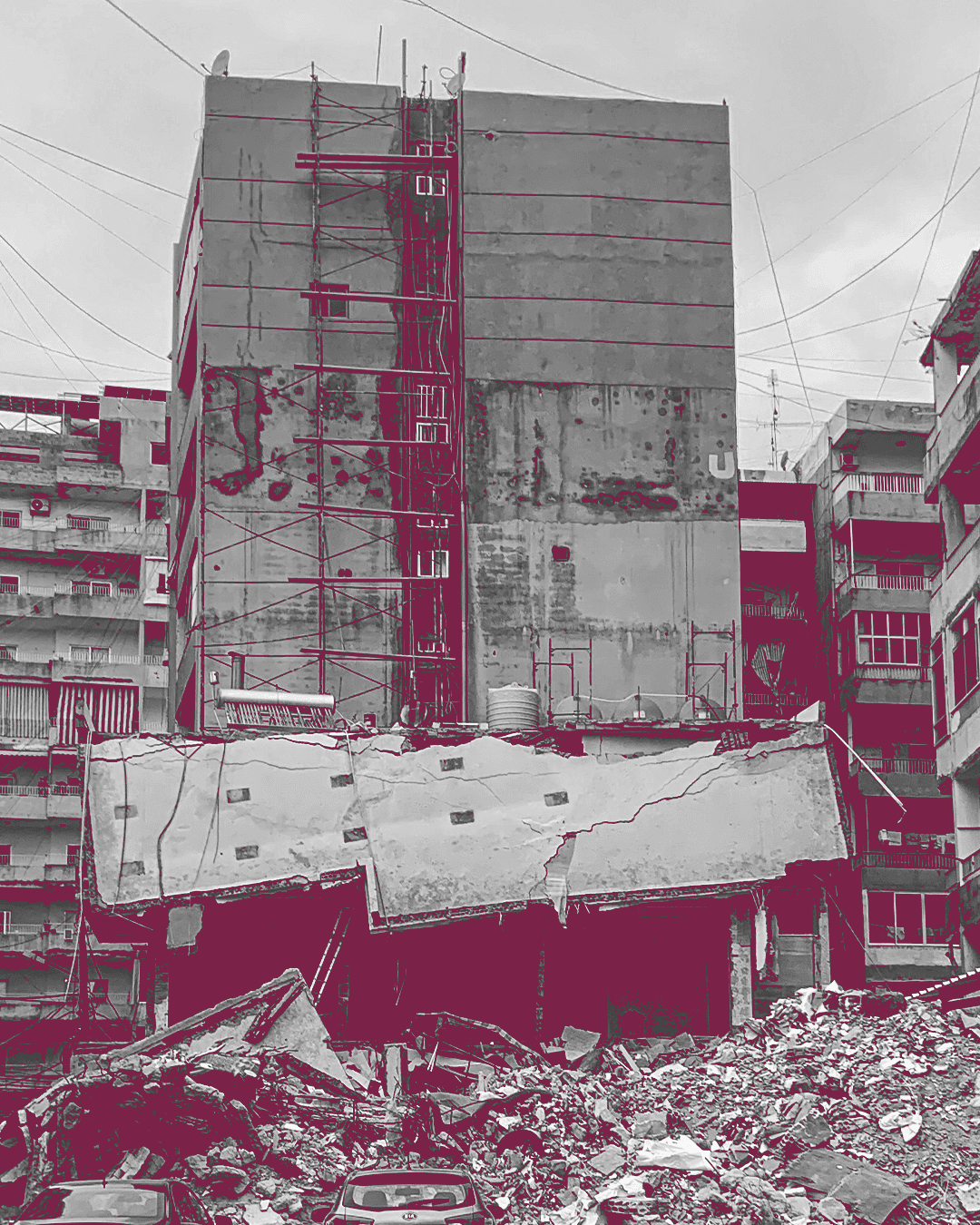
Today, this urban fabric faces a double struggle. The Israeli war between 2023 and 2026 caused widespread destruction and displacement, while the Lebanese state’s relief response further marginalized informal neighborhoods and the 2025 reconstruction law denies their residents the immediate right to rebuild their destroyed homes.
Drawing on fieldwork, maps, and data, this article traces the emergence of Beirut’s informal neighborhoods, the impact of Israeli destruction, and the ways in which property and reconstruction policies may become tools of further exclusion.
Read the full article in Arabic.


Solutions to Adapt to the Conditions of War: A Temporary Fix that Conceals the Necessity of Reforming Property and Construction Laws.
A Joint Commentary by Public Works Studio and Legal Agenda
The proposed draft law, submitted on November 19, 2024, suggests extending the validity of Law 294/2022 for five more years and applying some modifications to certain clauses. The law is proposed with the …