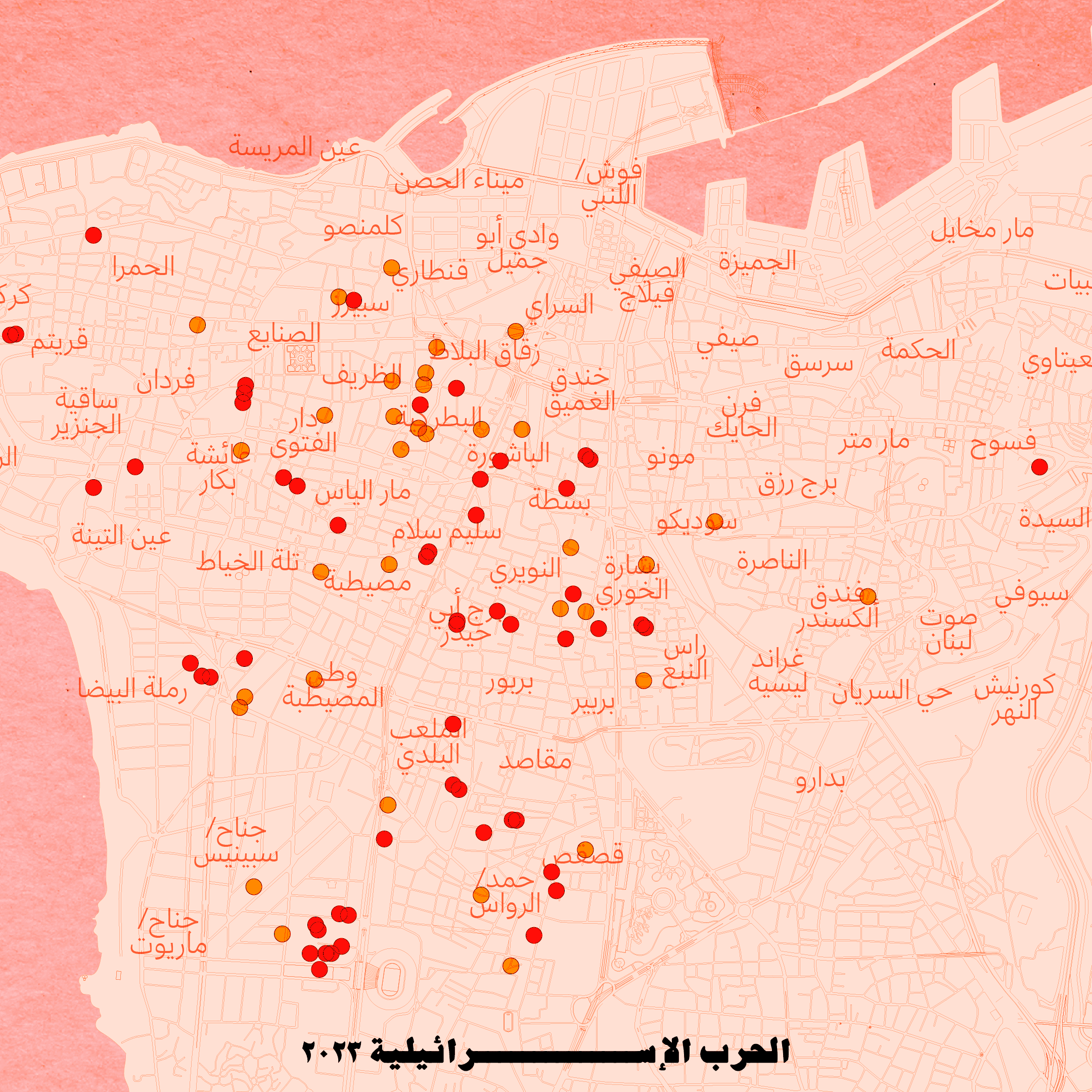
Amid ongoing escalation and growing waves of displacement toward the capital, Beirut’s shelter system is overwhelmed. With over 1.3 million people displaced and many centers already at capacity, families are often forced to move between overcrowded or unprepared facilities.
Based on a review of the number, types, and geographic distribution of shelters across administrative Beirut, this article highlights three key factors deepening inequality: limited and delayed expansion of shelter capacity, the concentration of centers in specific neighborhoods while others remain largely excluded, and the heavy reliance on educational institutions as primary shelter sites.
This review points to the need for a more equitable and sustainable shelter strategy, one that expands capacity, justly distributes responsibility across the city, and diversifies available shelter options.
In such a crisis, shelter cannot be treated as a purely technical or logistical issue, but as a matter of spatial justice and collective resilience.