When Southern Municipalities step into the State’s absence: A reading in Rent- control measures across southern villages of return

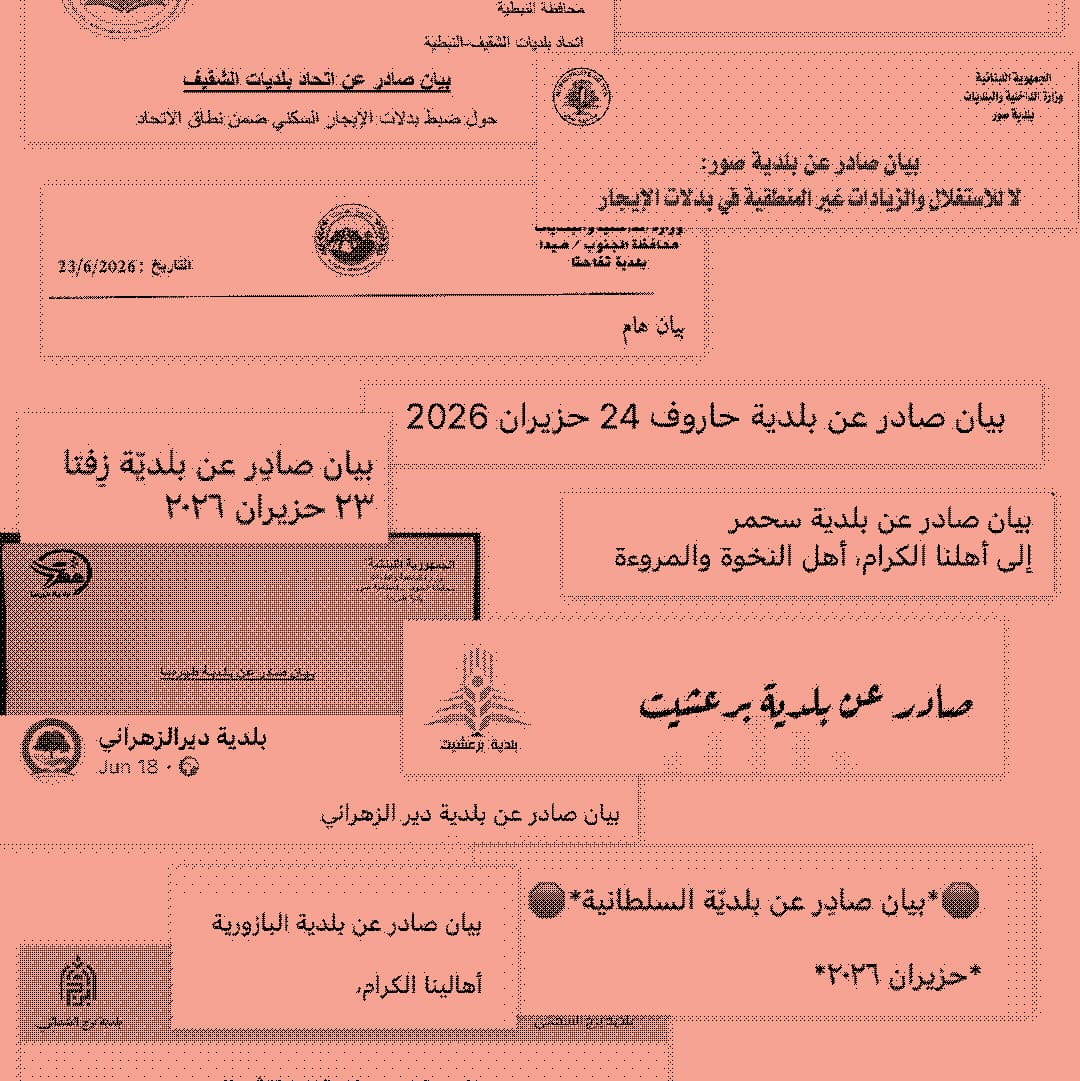
Between June 18 and 27, 2026, fifteen municipalities and two municipal unions across Nabatieh and South Lebanon capped rents to protect families returning to villages emptied by displacement during the Israeli war, echoing a similar 2023 circular from the Nabatieh Governorate.
This piece traces how local authorities are stretching what limited tools they have to rein in a rental market marked by flagrant exploitation, amid a total absence of state-level response and no national housing policy for the areas of return.
RESEARCH INNOVATION FUND – SECOND EDITION, CALL FOR PROPOSALS FOR RESEARCH PROJECTS ON:

Land and Housing in the Arab Region: Dynamics, Transformations and Mobilizations

Public Works Studio, in collaboration with the Arab Land Initiative, UN-Habitat, and the Global Land Tool Network (GLTN), invites researchers, practitioners, and activists to apply for the second edition of the Research Innovation Fund. The call supports research on land and housing in the Arab region through the lenses of governance, community movements and initiatives, local responses, and public policy.

Cartographies of Attack: Documenting a Continuing  Israeli War on Lebanon

Mapping, beyond its function as territorial representation, can operate as a form of testimony that renders visible the spatial and temporal patterns of violence often obscured in fragmented accounts. This article uses mapping as a method of testimony based on approximately three years of monitoring Israeli attacks on Lebanon. It reads patterns of bombardment, displacement, environmental destruction, and attacks on civilian infrastructure to understand how violence operates spatially through control, exclusion, and territorial transformation.

Old rent Verdicts continued:

A single verdict restores fund beneficiaries’ rights among fragmented readings of a broken law

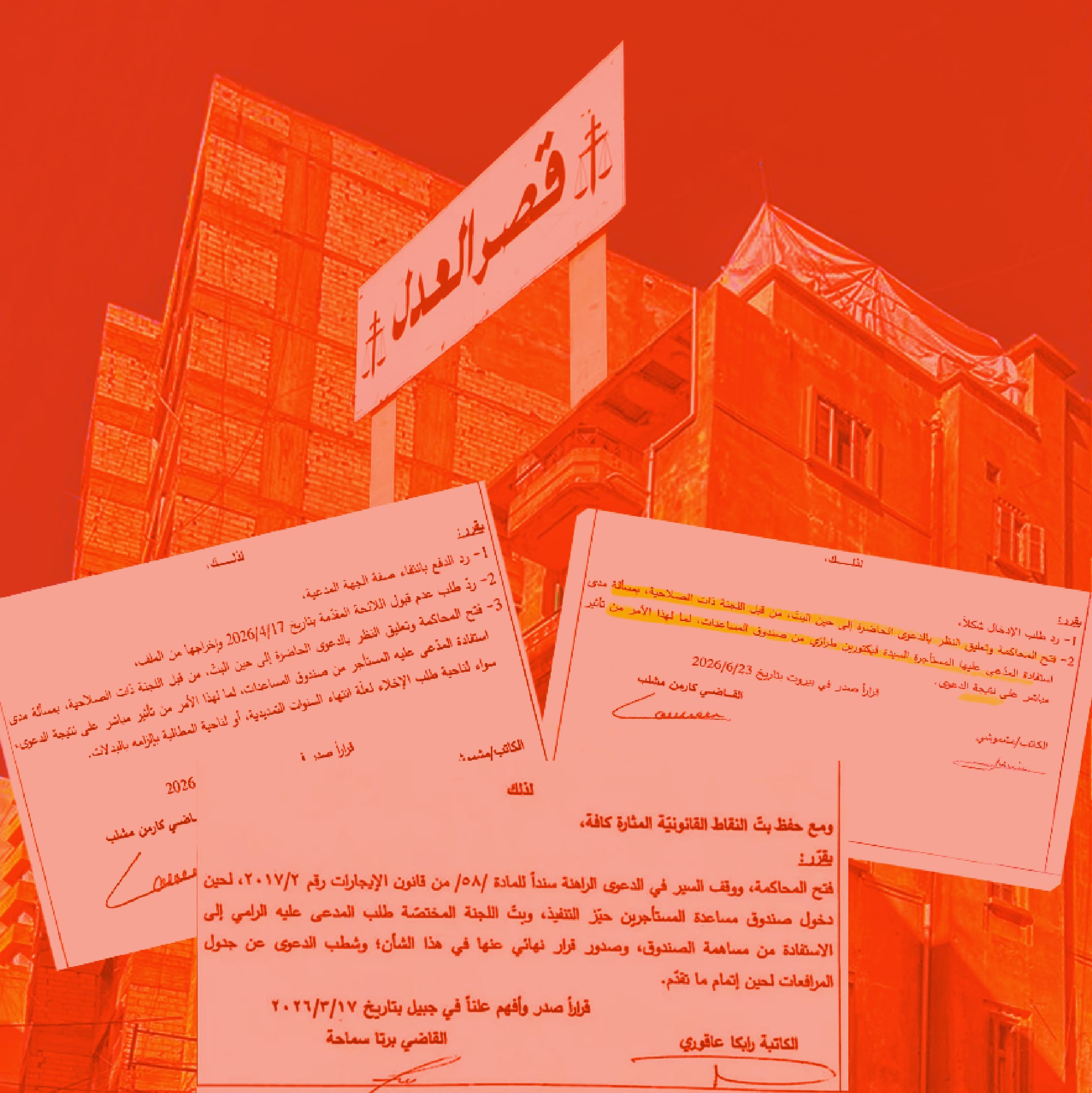
Since the nine-year extension expired in February 2026, Lebanese courts have been issuing verdicts in old rent cases at an accelerating pace, while navigating a law whose core components, the tenant support fund and committees, remain unfunded and inoperative. The Housing Monitor examines five recent verdicts that follow a troubling shared logic which examines procedural compliance in a non-functioning system to decide who qualifies for legal protection. Against this backdrop, one court stood apart, suspending court proceedings without demanding the impossible.

Report on Old Rent  Tenants Eviction From Their Historic Neighborhoods:

Mapping Eviction Mechanisms  and Proposing Protection Alternatives.

أزمة الإيجارات القديمة في لبنان ليست صراعًا بين مستأجرين ومالكين، بل علاقة استغلالية أتت نتيجة عقود من غياب السياسات السكنية. مع انقضاء السنوات ال9 التمديدية التي طرحها القانون 2/2017، دون تفعيل أي من البرامج الداعمة التي نصّ عليها ، تحوّل القانون فعلياً إلى أداة عدّ عكسي نحو الإخلاء. يستند تقريرنا إلى 130 حالة موثّقة بين آذار 2022 وآذار 2026، ويعيد طرح القضية كمساءلة لسياسات الدولة لا كنزاع بين طرفين.

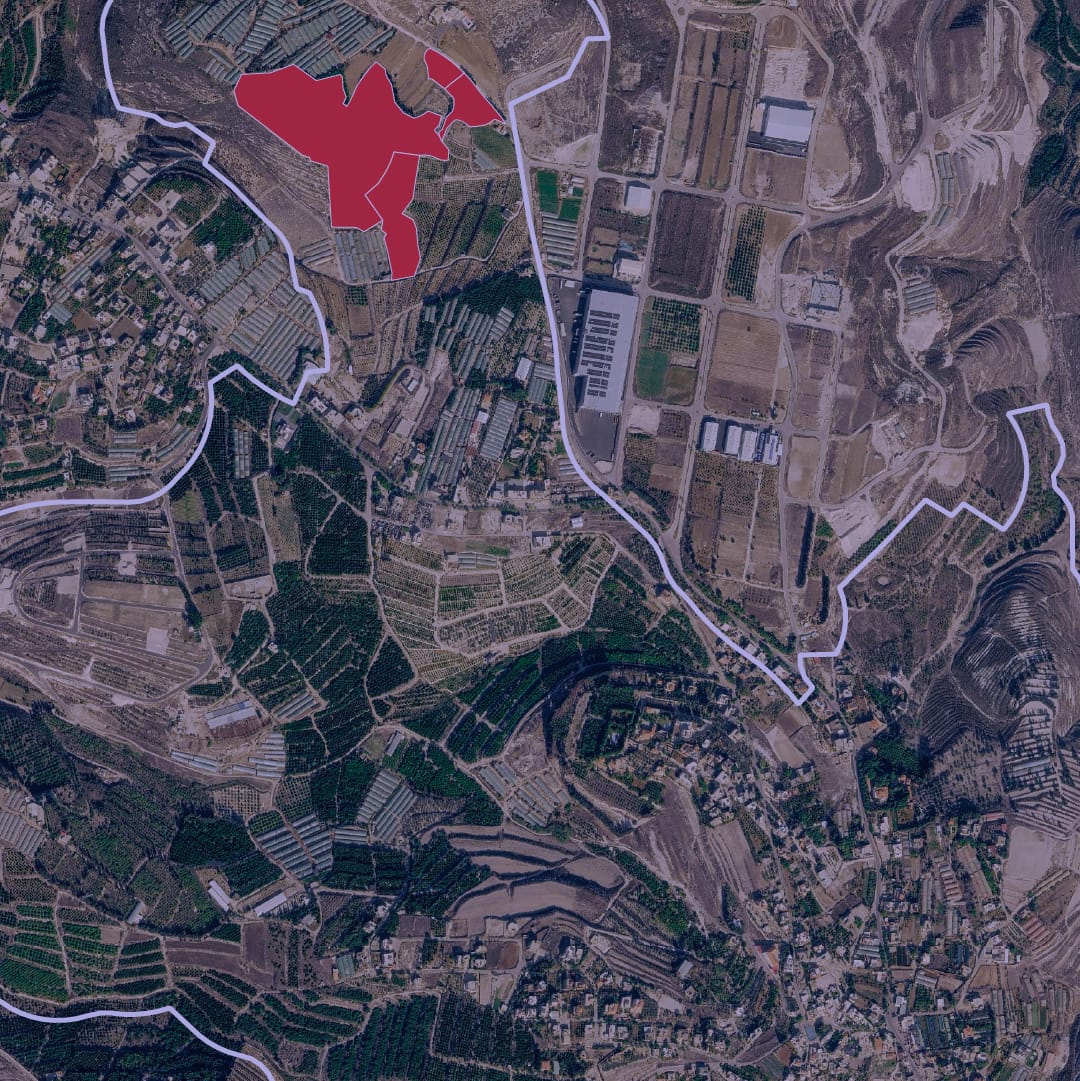
Qaaqaiyat al-Sanawbar once again: Israel is erasing southern villages, while our state destroys their agriculture.

Since the start of the 2024 war, the zionist entity has targeted Qaaqaiyat al-Sanawbar for 175 days, in addition to threats of evacuation, forcing the remaining residents to flee.
While the town is being destroyed, the authorities have reclassified agricultural areas within it as an industrial zone through Decree No. 2304, issued on January 22, 2026.
This exacerbates the destruction and extraction perpetrated by the occupation.

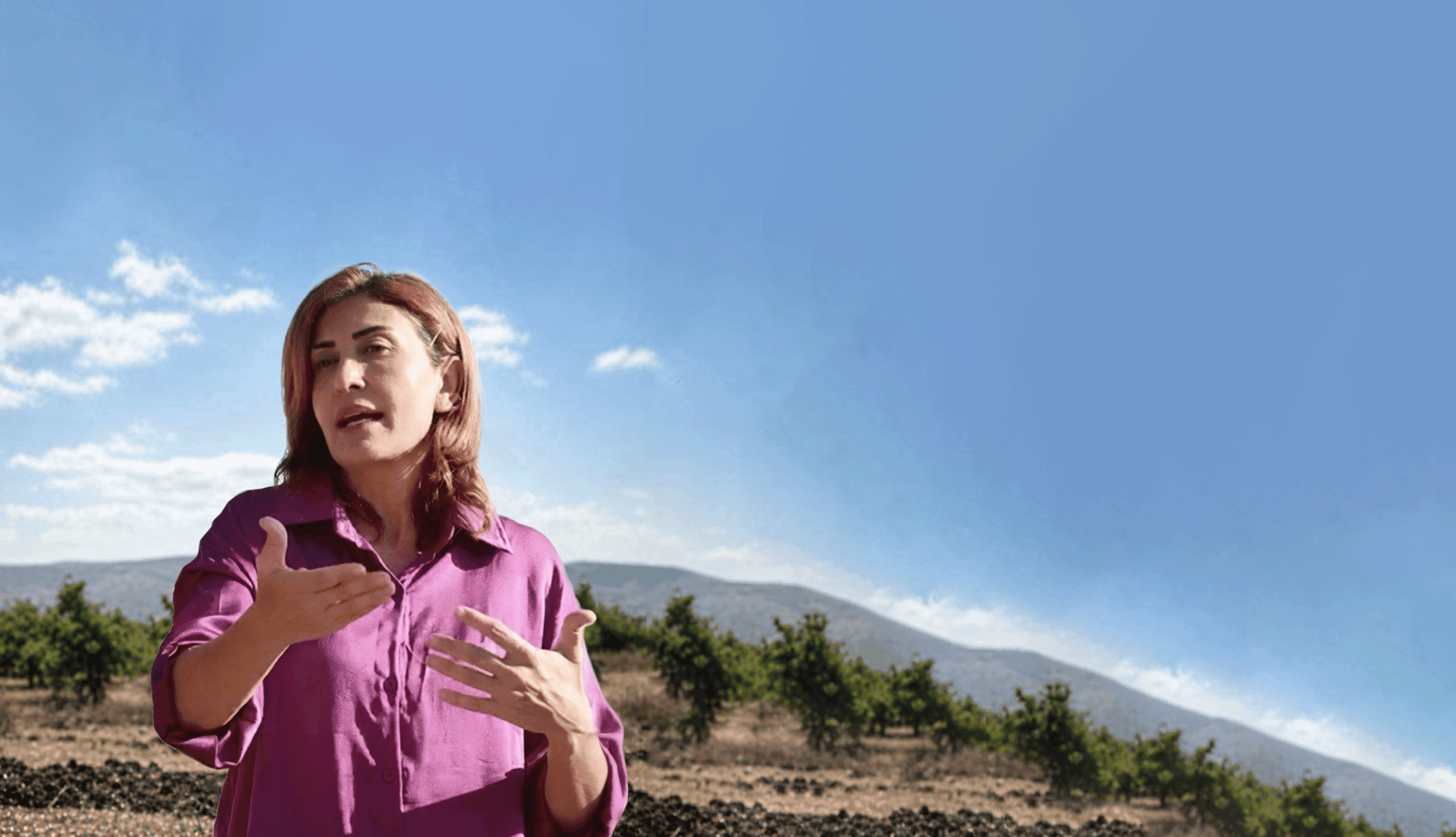
On the fortieth day since the martyrdom of journalist Amal Khalil: An interview with her about the South and its lands

In her home in Bayssariyeh, Amal welcomed us on February 28, 2019. She was the one speaking, and we were the ones asking questions about the South, its people, and its problems.
On April 22, 2026, while doing the same thing—telling people about the South and standing against the erasure of memory and land—Amal was killed in an Israeli airstrike that targeted her several times.
As part of a research project on the agricultural plain in the Zahrani region, we had observed changes in land ownership, and wanted to understand the reality of these ownership structures and their implications.
Below are the words of the martyred journalist Amal Khalil about the Zahrani Plain.

Behind the Scenes of Legitimizing Illegal Quarries: How the Government and Cement Companies Manipulated Urban Planning Frameworks in Koura

This commentary takes a spatial approach to dissecting the Lebanese Government’s controversial Decisions No. 16 and No. 59 (passed in April 2026), exposing them as a continuation of a decades-long trajectory of collusion between the state and the powerful cement cartel, including the two major companies operating in Koura: “Holcim” and “National Cement Company.”

Regarding yesterday’s BIEL incident and the “encroachment” speech on the waterfront

English 3-liner
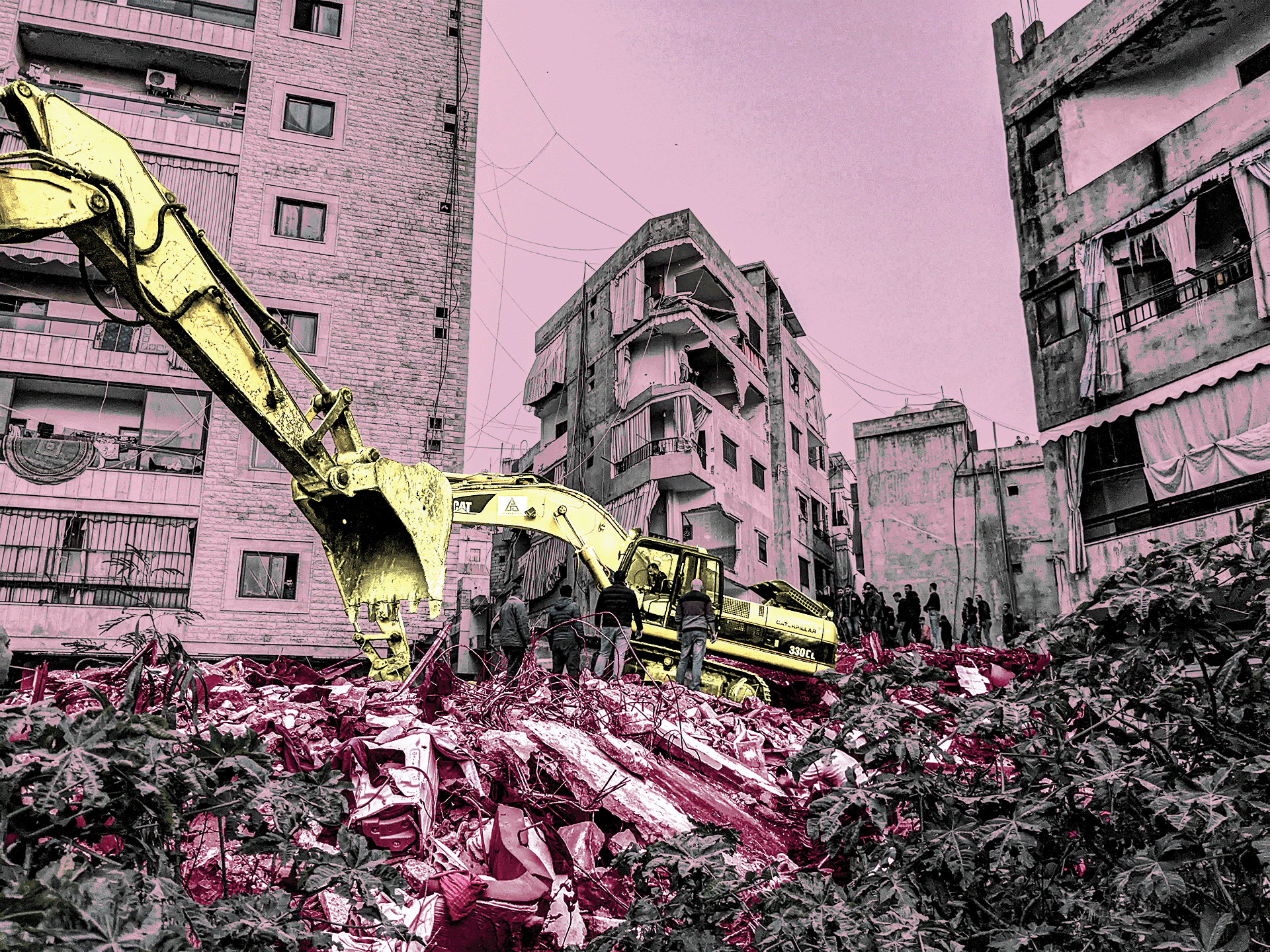
On May 18, a large number of security forces arrived at BIEL and began relocating displaced families, who had settled there due to the lack of safe alternatives, to a limited area within the same property.
The municipality is estimated to provide between 200 and 300 tents, while approximately 600 families currently reside in the area, with no clarity regarding the fate of those families who will not receive a tent. Meanwhile, many of the displaced Syrians have fled the area, fearing the actions of the security forces.
This event was accompanied by escalating rhetoric claiming that the displaced refuse to move to shelters, and therefore are “squatting” in downtown Beirut, hindering tourism.
In this statement, we clarify some points concerning the rights of displaced communities in safe displacement shelters that they choose and adapt, and the need for the state’s support that prioritizes the safety, security and wellbeing of the displaced communities.

A Proposal to Address Building Collapses:

Filling the Legal Void Does Not Replace the State 

Building collapses in Lebanon are no longer isolated incidents, but the result of a long accumulation of neglect and the state’s retreat from its responsibilities toward public safety. The latest draft law proposed by deputy Ihab Matar seeks to establish a mechanism for addressing structurally damaged buildings by organizing roles and relying on incentives and private financing rather than developing a comprehensive public policy. Yet when rehabilitation is tied to economic feasibility and investment opportunities, the question remains: what kind of city is being shaped, and for whom is it being rebuilt or renovated?

What Are My Rights During and After Evictions from  Buildings at Risk of Collapse?

In the wake of Tripoli’s building collapse crisis, this legal memo serves to inform residents of the rights guaranteed to them under Lebanese and international law at every stage of eviction and beyond, from prior notice and dignified relocation to guaranteed return, and calls on them to demand these protections both on an individual and collective level.

Monitoring Draft laws and Government Decisions: 

What Did the State Do During the War?

This report monitors the performance of the government and parliament during the period of the Israeli aggression up to 15 April, and shows the absence of a comprehensive response that tackles social and economic impacts. Partial responses and an increasingly security-driven approach were adopted, alongside the passing of decisions that do not reflect the priorities of the moment nor the scale of the ongoing collapse. This reveals an ongoing crisis management through a business-as-usual logic, without an integrated approach that places people’s needs at the center of the response.