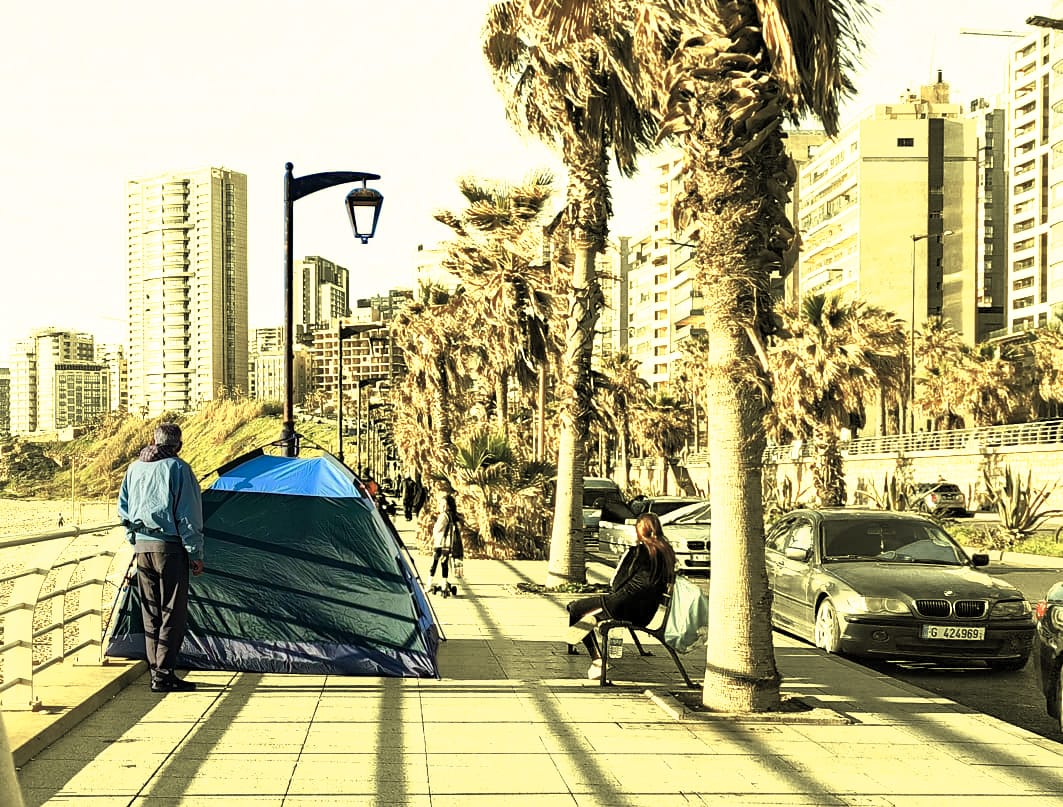
On May 18, a large number of security forces arrived at BIEL, the reclaimed waterfront area in the northern part of the city center, and began relocating displaced families, who had settled there due to the lack of safe alternatives, to a limited area within the same property. A representative of the Beirut Municipality stated that the aim was “to bring the displaced people onto municipal land and clear private land so that we can provide for their needs, including food, water, and clothing, and try to manage the situation logistically.”
The municipality is estimated to provide between 200 and 300 tents, while approximately 600 families currently reside in the area, with no clarity regarding the fate of those families who will not receive a tent.
Meanwhile, many of the displaced Syrians have fled the area, fearing the actions of the security forces. As for many displaced Lebanese families, they have chosen to return to their homes to avoid humiliation or out of fear of what might happen. For example, one family of 12 returned to Al-Kafaat, preferring it to these conditions. Thus, the authorities succeeded in “displacing” some of the displaced families, so to speak—a tactic we have come to expect from an authority that views people and their needs, even in the most dire circumstances, as a burden on itself and the city.
This event was accompanied by escalating rhetoric claiming that public property is not a place for displacement, that the displaced refuse to move to shelters, specifically to the Sports City, and therefore are “squatting” in downtown Beirut. Finally, it was alleged that the displaced in the BIEL area are hindering tourism in a district brimming with restaurants and nightclubs.
In this statement, we clarify some points concerning the rights of displaced communities in safe displacement shelters that they choose and adapt, and the need for the state’s support that prioritizes the safety, security and wellbeing of the displaced communities.